How Family Dinners Have Changed Over the Decades
Alvin Cortes
September 8, 2026
Family dinner sounds like one of those traditions that should have remained basically unchanged. People get hungry, someone makes food, everyone sits around a table and eats.
In reality, the family dinner has changed along with almost everything else about home life.
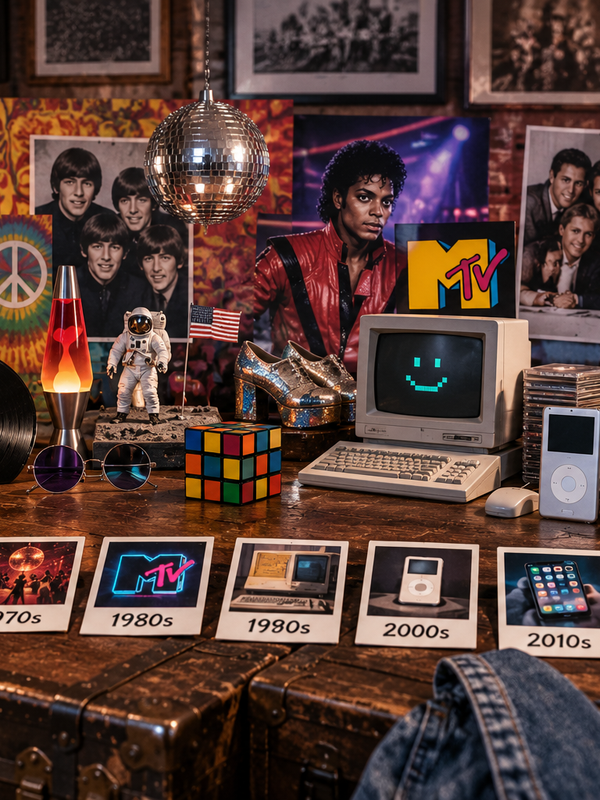
A dinner table in the 1950s might have been organized around a predictable workday, a stay-at-home parent and a meal cooked from scratch. By the 1980s, microwaves and frozen foods were transforming what counted as dinner. By the 2000s, takeaway and delivery were becoming routine. Today, a family might eat the same meal together while one person checks a phone, another watches something on a tablet and someone else is answering a work message.
The food changed, but so did the family, the workplace and the meaning of sitting down together.
The postwar dinner table followed a routine
The popular image of the 1950s family dinner is almost impossibly tidy.
A family sits around a dining table at the same time every evening. Dinner has been cooked at home. Parents ask children about school. Nobody has a phone nearby because, obviously, there are no phones to bring to the table.
Reality was more complicated than the nostalgic version suggests, but routines were often more rigid.
In many households, particularly in the postwar middle-class ideal presented through advertising and television, men worked outside the home while women were expected to manage cooking and domestic responsibilities. Dinner could require significant preparation because convenience foods were still developing.
Meals also tended to happen according to clearer schedules.
Shops closed earlier, entertainment options were limited and work was much less likely to follow someone home through a laptop.
Family dinner had a defined place in the day.
Convenience foods transformed the kitchen
The second half of the twentieth century brought an enormous shift in how food was prepared.
Frozen meals, canned ingredients and packaged foods had already existed, but supermarkets increasingly filled with products designed to reduce cooking time.
Then the microwave became a common household appliance.
Suddenly, leftovers could be reheated in minutes. Frozen dinners required very little preparation. Different family members could eat at different times without someone cooking an entirely new meal.
This was extremely useful as family schedules became more complicated.
More women entered paid employment, children participated in organized activities and households no longer necessarily operated around one predictable daily timetable.
Convenience food is sometimes remembered as evidence that people stopped caring about cooking.
A more realistic interpretation is that families had less time.
The food industry noticed and built products around that reality.
Television competed with the dining table
Television changed family dinner long before smartphones did.
As televisions became central features of living rooms, eating while watching became increasingly normal. Some households moved dinner away from the dining room entirely.
The invention of the TV dinner made the connection almost literal.
Meals could be served in individual trays designed to be eaten conveniently while watching television.
By the 1980s and 1990s, many families had multiple televisions. Children might eat while watching cartoons. Parents could have dinner in front of the evening news.
The family meal had gained competition.
Interestingly, television could also create a new type of shared experience. Families might gather specifically to eat while watching a favorite show together.
They were still spending time together.
They were just looking in the same direction instead of at each other.
Takeaway became an ordinary dinner option
Ordering food was once more limited than it is today.
Depending on where you lived, delivery might mean pizza or Chinese food. Most restaurant meals still required actually going to the restaurant.
That gradually changed.
Takeaway options expanded, cities gained increasingly diverse restaurant scenes and delivery became more common.
By the 2000s, ordering dinner was no longer necessarily reserved for special occasions.
Then smartphones and delivery apps removed almost all the remaining friction.
A family could browse dozens of restaurants, order different meals, pay digitally and track the driver from the same device.
This created a completely new version of family dinner.
Everyone could technically eat together without anyone eating the same food.
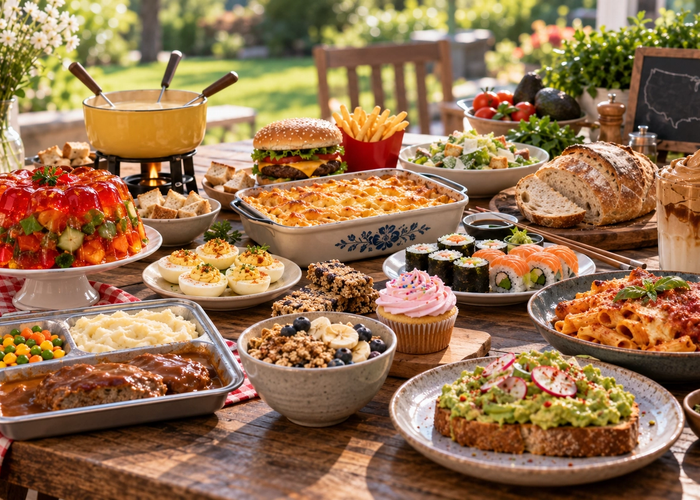
One person wants sushi. Another wants a burger. Someone else wants noodles.
Historically, whoever cooked largely determined what dinner was. Modern delivery gives every person at the table considerably more negotiating power.
Work followed parents home
One of the biggest changes to family dinner has little to do with food.
Work stopped staying at work.
For much of the twentieth century, leaving the office created a fairly clear boundary. Someone could still receive a telephone call at home, but they weren’t carrying their entire workplace in their pocket.
Email, laptops and smartphones changed that.
A parent can now sit at the dinner table while receiving messages from colleagues. Remote work has blurred the boundary further because the office may literally be in the next room.
Children’s schedules have become complicated too.
Sports, lessons, homework and social activities can make finding one time when everyone is available surprisingly difficult.
The traditional dinner hour has to compete with dozens of other obligations.
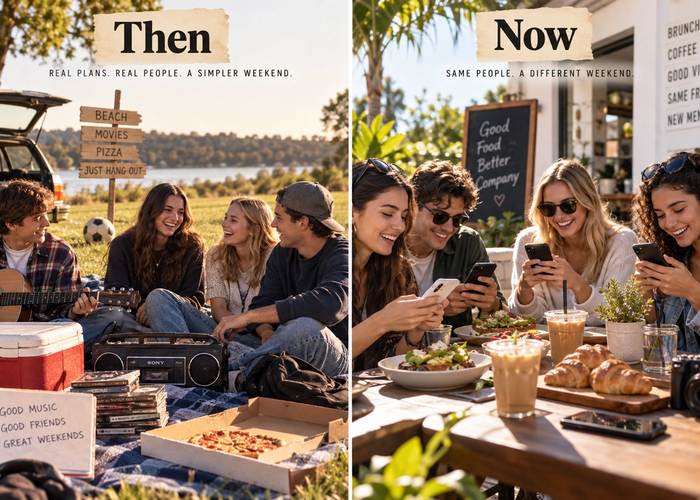
Phones created a new guest at the table
Television distracted families together.
Smartphones distract everyone individually.
That is an important difference.
One person might be scrolling through social media while another responds to messages and someone else watches a video. Everyone can be physically present while occupying completely different digital environments.
This is why “no phones at dinner” became a household rule that would have sounded absurd a few decades ago.
The rule exists because the dinner table is now one of the few places where families can deliberately create a boundary around attention.
For some households, putting phones away has become part of the ritual itself.
Family dinner became less formal but perhaps more intentional
Modern family dinners do not necessarily resemble the version shown in old advertisements.
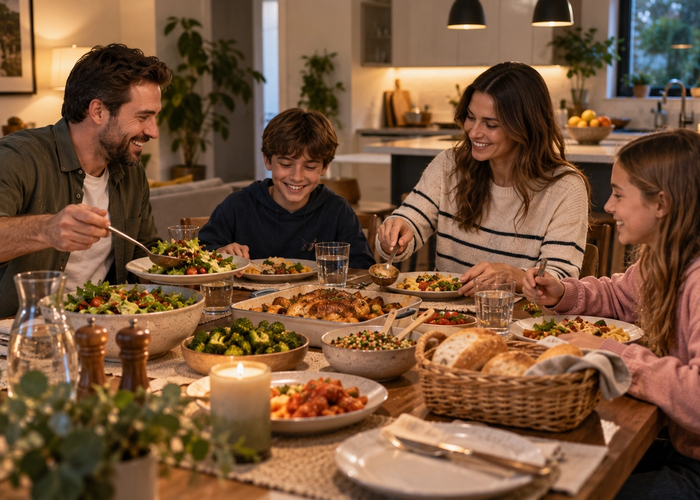
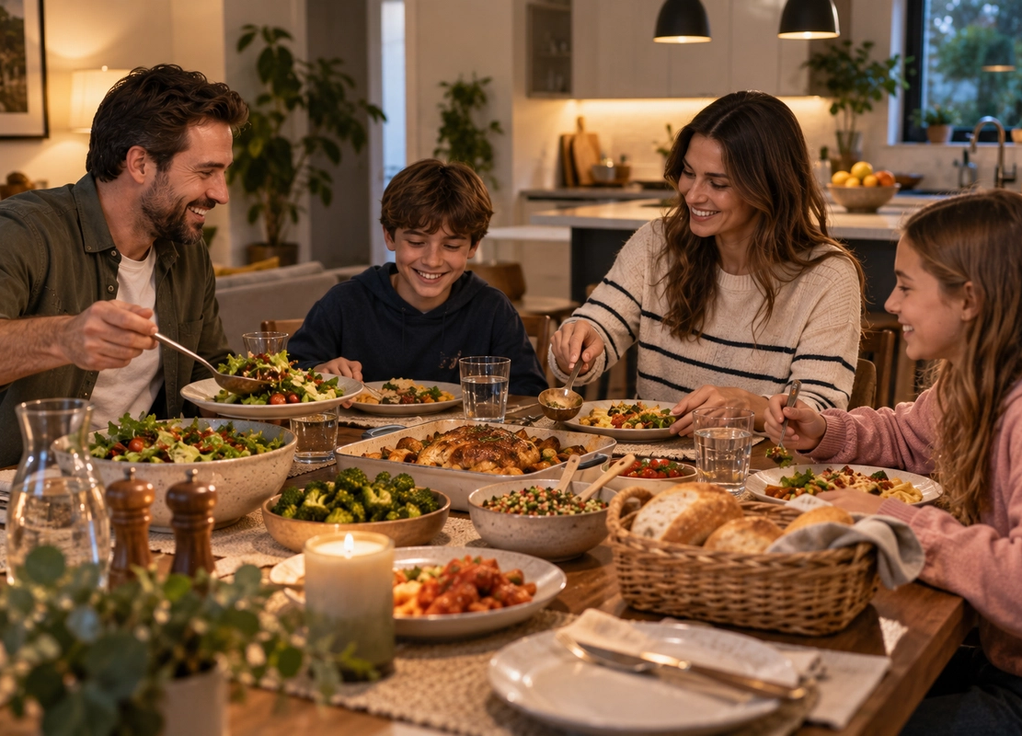
Dinner might happen around a kitchen island instead of a formal dining table. Someone may be eating leftovers. Another person may arrive late from work. The meal might have come from a delivery app.
Families themselves are also more varied, and household routines no longer follow one dominant model.
Yet the basic attraction of eating together has survived.
In fact, because modern schedules make shared time harder to arrange, sitting down for dinner can become more meaningful rather than less.
The traditional family dinner was often something people did because that was simply how the household operated.
Today, it may require a conscious decision.
The table changed because life changed
It is easy to romanticize family dinners of the past.
There were fewer screens, more predictable routines and often more home cooking. But those routines were also supported by social expectations and divisions of domestic labor that many families would not want to recreate.
Modern households gained flexibility, convenience and far more choices about how they eat.
They also gained distractions.
The family dinner did not disappear. It adapted.
Sometimes it is homemade pasta around a dining table. Sometimes it is takeaway containers on a kitchen counter. Sometimes everyone has to put their phones in another room just to make the conversation happen.
The details are different.
The reason for gathering is remarkably familiar.