The Quiet Wisdom of Doing Things the Old-Fashioned Way
Raya Hawkins
September 9, 2026
Not everything needs an upgrade.
We live in a world built around making things faster, easier and more automated. Groceries arrive at the door. Messages cross continents instantly. Phones remember our appointments, directions, photographs and even the numbers of the people we call most often.
Most of this is genuinely useful. Few people would voluntarily return to waiting weeks for a letter or unfolding a giant road map on the side of a highway.
But some old-fashioned habits have survived for a reason.
Writing something by hand, repairing an object instead of replacing it or cooking a meal slowly can seem inefficient compared with modern alternatives. Yet efficiency is not always the only thing worth optimizing. Sometimes doing something the slower way gives us something speed cannot.
Writing by hand forces us to slow down
Typing is faster than handwriting for most people.
That is precisely why writing by hand can be useful.
When taking notes on paper, you cannot always capture every word. You have to decide what matters, shorten ideas and put information into your own language.
A notebook also has one major technological advantage: it is terrible at distracting you.
There are no notifications appearing in the corner of the page. A handwritten grocery list will never suddenly show you a video.
Writing letters works similarly.
Sending someone a message takes seconds. Writing a letter requires choosing paper, finding words, addressing an envelope and actually sending it.
The extra effort becomes part of the meaning.
A handwritten birthday card feels different from a notification because someone had to spend time creating it.
Sometimes inconvenience is what makes something personal.
Cooking from scratch teaches more than a recipe
Modern food offers extraordinary convenience.
You can order dinner in minutes or heat a prepared meal without understanding anything about how it was made.
There is nothing inherently wrong with that. Convenience food solves a very real problem: people are busy.
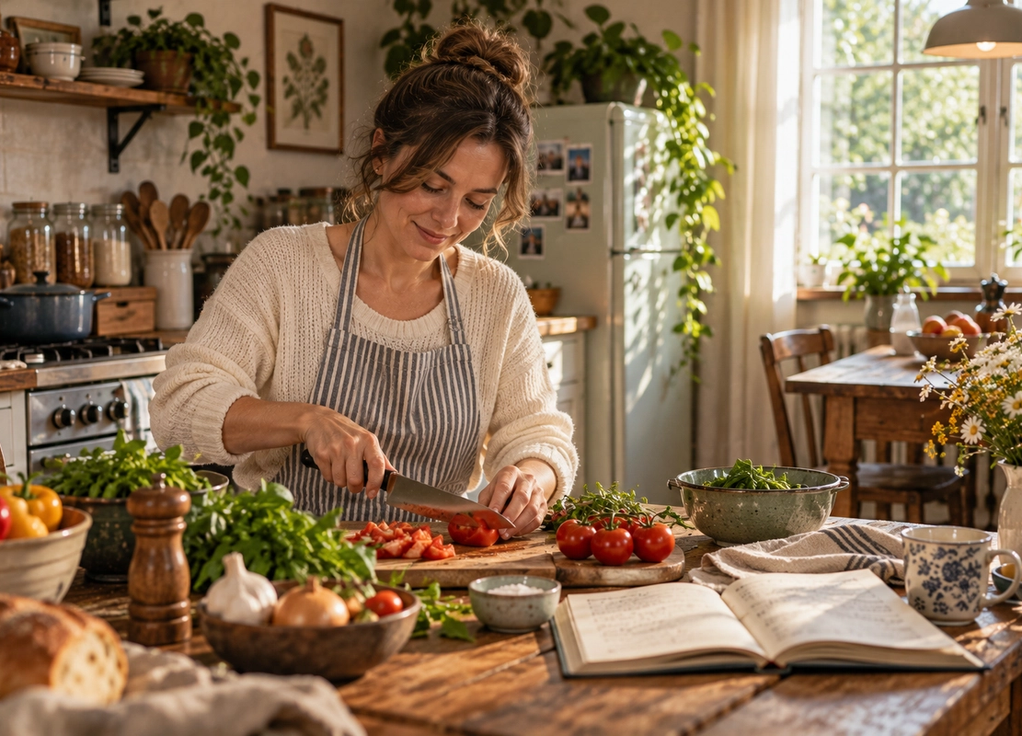
Still, cooking from basic ingredients offers something different.
You learn how food behaves.
You discover what happens when onions cook slowly, why dough needs time, how seasoning changes a dish and how leftovers can become tomorrow’s meal.
Older generations often learned these skills through repetition rather than formal instruction. Recipes were sometimes approximate because the cook already understood what the food should look and feel like.
That knowledge creates independence.
If you know how to cook, a refrigerator containing seemingly unrelated ingredients can still become dinner.
That is a small but surprisingly useful kind of freedom.
Repairing things changes how we value them
Modern consumer culture makes replacement incredibly easy.
A toaster breaks and a new one can arrive tomorrow. Clothing develops a small tear and replacing it may cost less than professional repair.
That convenience has gradually changed our relationship with possessions.
Older household objects were often expected to be maintained. Shoes could be resoled. Clothing was patched. Furniture was repaired and refinished.
Of course, older products broke too. The past was not a magical era of indestructible appliances.
But repair was more commonly considered a normal stage in an object’s life.
There is practical wisdom in recovering some of that attitude.
Learning to sew on a button, tighten a loose handle or repair a small household problem saves money.
It also creates a different relationship with belongings.
Something you maintain feels less disposable.
Memorizing a few things is still useful
Smartphones have become external memory.
We no longer need to remember phone numbers, directions, appointments or countless small facts because a device can store them more accurately.
That is incredibly convenient until the device is unavailable.
There is still value in knowing a few important things without checking a screen.
A family member’s phone number. Your home address. Basic directions around your neighborhood. Important dates.
Previous generations memorized these things because they had no alternative.
Today, remembering them can seem almost unnecessary.
But outsourcing every piece of information makes us strangely dependent on one small object.
You do not need to memorize an encyclopedia.
Knowing how to function when your battery reaches zero is enough.
Walking somewhere changes what you notice
Cars and public transportation allow us to move efficiently through places.
Walking forces us to experience them.
A route that feels completely ordinary from inside a car can look different on foot. You notice small shops, gardens, buildings and people you would otherwise pass in seconds.
Walking also allows for unplanned encounters.
You stop somewhere because it looks interesting. You see someone you know. You discover a street you have never used.
Older communities were often more walkable partly because daily life had to happen at shorter distances.
Modern cities can spread activities across enormous areas.
Whenever walking is practical, choosing it occasionally can reconnect us with the actual scale of where we live.
The slower journey becomes part of the activity rather than wasted time between activities.
Buying fewer things can make choosing easier
Older generations did not necessarily own less because they had discovered the secret to minimalism.
Consumer goods were often more expensive relative to income, selection was smaller and replacing things required more effort.
Still, limited choice had an interesting side effect.
Purchases mattered.
Today, online shopping gives us access to almost endless options. That sounds ideal until you spend 40 minutes comparing nearly identical lamps.
The old-fashioned habit of buying something carefully and keeping it for a long time can reduce that constant cycle of choosing, purchasing and replacing.
Quality matters more when you expect to own something for years.
So does learning to be satisfied once the decision has been made.
Talking without a screen creates a different conversation
Communication has never been easier.
A family spread across several countries can maintain daily contact. Friends can share photographs instantly. These are genuine improvements over the limitations of older communication.
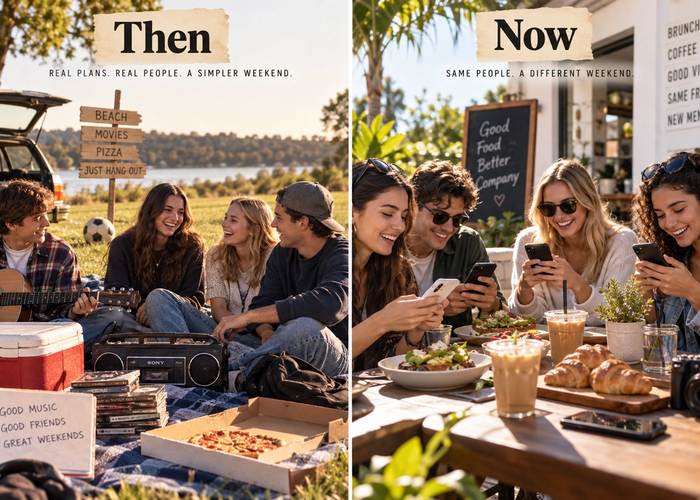
But digital communication also makes partial attention normal.
We can respond to one person while sitting with another.
Old-fashioned conversation demands something increasingly unusual: being in one place with one person and having nothing else open.
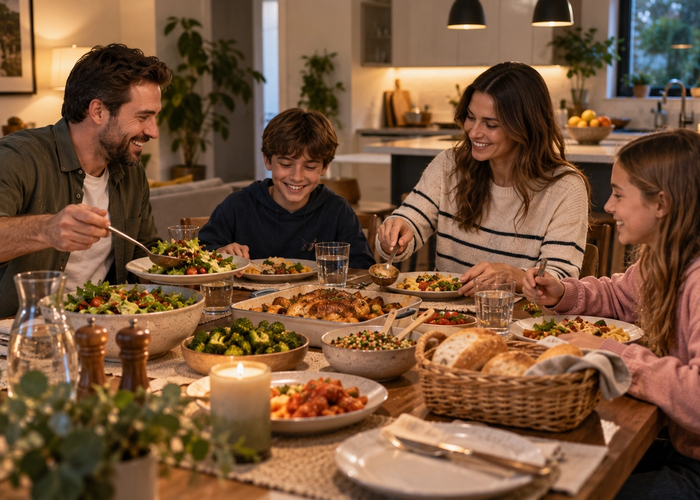
That might mean coffee without checking a phone every few minutes. It might mean a family dinner where devices stay away from the table.
The value does not come from pretending smartphones are bad.
It comes from temporarily removing the possibility of being somewhere else.
Waiting can make experiences feel bigger
Many things once required anticipation.
Photographs had to be developed. Letters took days to arrive. A favorite television show appeared once a week. A package could not be tracked every ten minutes.
Waiting was frequently annoying.
But anticipation also gave experiences shape.
There was a before, a moment of arrival and an after.
Instant access compresses those stages.
If you want a song, you play it. If you want a movie, you stream it. If you want to speak to someone, you message them.
Sometimes deliberately waiting can restore a little of that anticipation.
Planning a special meal, saving for something instead of immediately buying it or waiting to open a gift sounds almost ridiculously simple.
That is exactly the point.
Old-fashioned does not automatically mean better
There is no wisdom in making life inconvenient purely because people used to do things that way.
Washing machines are better than washing everything by hand. GPS is safer and easier than getting lost. Modern medicine is preferable to old-fashioned remedies simply because they are traditional.
The useful question is not whether the old way was more authentic.
It is whether something valuable disappeared when we removed the effort.
Sometimes the answer is no.
Sometimes the answer is patience, skill, attention or a stronger connection with the thing we are doing.
Modern life is exceptionally good at saving time.
The quiet wisdom of doing a few things the old-fashioned way is remembering that not every minute needs to be saved.
Some are worth spending.