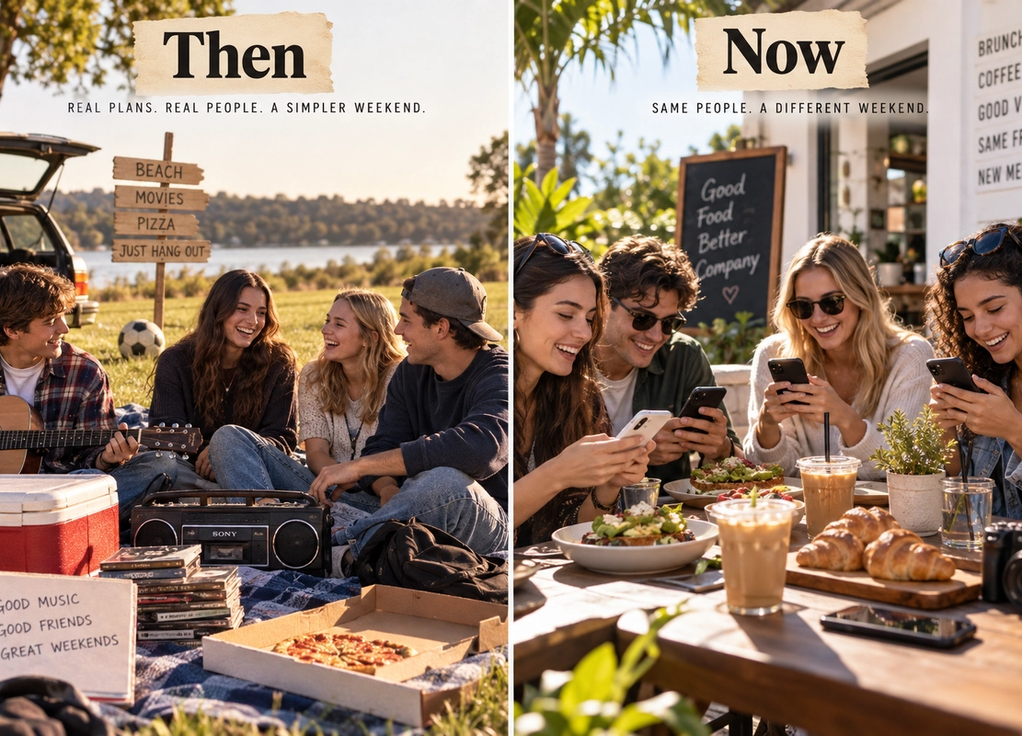
Then vs Now: How We Actually Spent Weekends Before Smartphones
Jovanni Chan
September 8, 2026
Before smartphones, weekends were not necessarily more exciting. People still got bored, wasted entire afternoons and spent Sunday evenings wondering where the weekend had gone.
What was different was the amount of planning and uncertainty involved.
You could not wake up, open one device and immediately see what your friends were doing, where to eat, what movie to watch, how to get somewhere and whether it would rain later. Plans were made through landline calls, face-to-face conversations and sometimes surprisingly vague instructions.
Once you left the house, you were also much harder to reach.
That changed the rhythm of a weekend. There was more waiting, more wandering and considerably more chance involved.
Making plans actually required making plans
A weekend with friends usually started before the weekend itself.
You might arrange something at school, work or over the phone. The important details had to be established in advance because changing them later was not always easy.
“Meet outside the cinema at seven” was not a suggestion. It was infrastructure.
If someone was late, everyone else simply waited. There was no message saying they were five minutes away. There was no moving dot on a map showing their location.
Eventually, someone had to decide whether the missing person was still coming.
This could be incredibly inconvenient, but it also meant plans tended to be more definite. Once everyone had agreed to meet somewhere, there was less opportunity for an endless group chat to spend three hours debating six alternatives.
Shopping was entertainment
Before almost everything could be ordered from a phone, shopping regularly became part of the weekend itself.
People went into town, visited shopping centers and wandered through stores without necessarily knowing exactly what they wanted.
Record stores were particularly good at consuming an afternoon. You could browse CDs, listen to recommendations and discover albums simply because the cover looked interesting.
Video stores offered a similar ritual.
Choosing a movie meant physically walking through rows of VHS tapes or DVDs, reading the boxes and negotiating with whoever you were watching with. If the movie you wanted was unavailable, you chose something else.
The limited selection created decisions that could not be solved by scrolling through another 500 options.
Being bored usually meant leaving the house
Boredom worked differently before smartphones.
Today, a few empty minutes can immediately be filled with videos, messages, games, news or social media. Before smartphones, there were far fewer instant escapes.
If nothing interesting was happening at home, leaving became an obvious solution.
Children went outside. Teenagers wandered around town. Adults visited friends, went for drives or found somewhere to sit for coffee.
Not every outing had a purpose.
Sometimes people simply went somewhere to see what was happening.
That kind of unstructured wandering has become less necessary because entertainment now follows us everywhere. There is rarely a moment when absolutely nothing is available to occupy our attention.
Getting somewhere involved a little faith
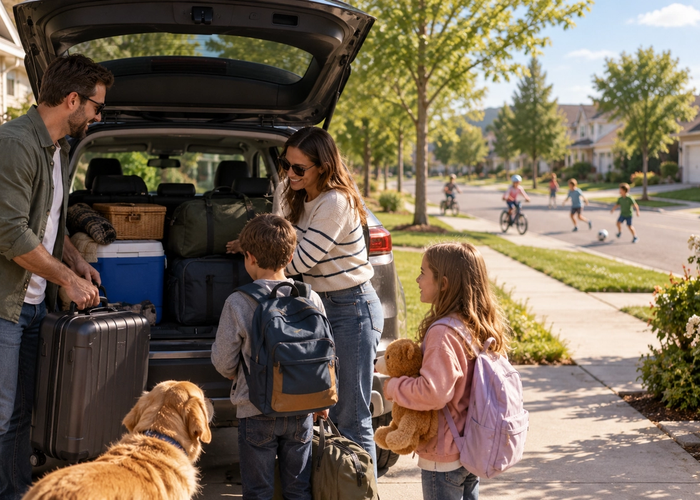
Spontaneous weekend trips could become genuine adventures because navigation was not automatic.
Drivers used road maps, printed directions or instructions from someone who insisted the destination was “just after the big roundabout.”
If you missed a turn, your car did not politely calculate another route.
You figured it out.
Getting lost was annoying, but it also created stories. People discovered places accidentally because they took the wrong road or stopped somewhere to ask for directions.
Even finding a restaurant required more uncertainty. You might choose somewhere because it looked busy, because a friend recommended it or because you happened to walk past.
There were reviews, guidebooks and recommendations, but there wasn’t a rating floating above every place you considered entering.
Saturday night entertainment happened on a schedule
Television once dictated when entertainment happened.
If a movie or favorite show aired on Saturday evening, you needed to be available when it started. Missing it could mean waiting for a rerun.
Going to the cinema required similar planning. You checked screening times in a newspaper, called the theater or looked at the listings after the internet became common.
Music was physical too.
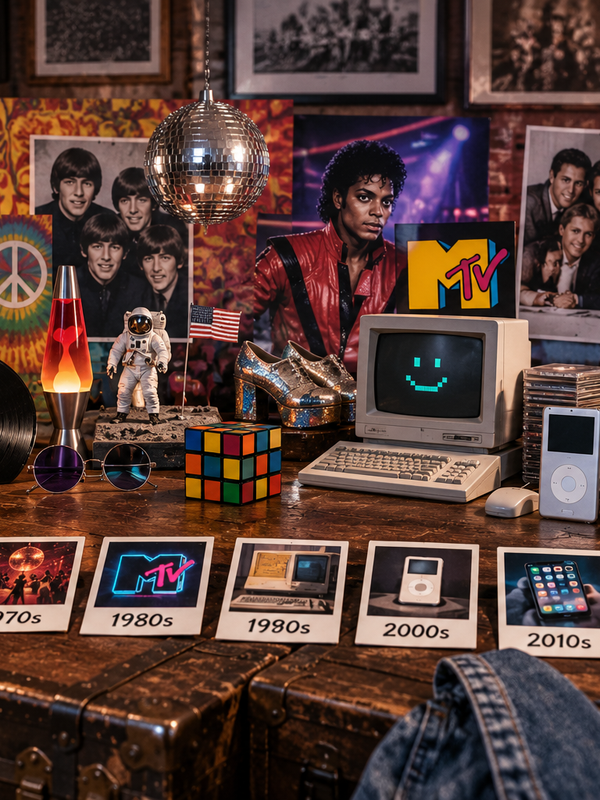
A weekend might involve making a mixtape, listening to a new album repeatedly or borrowing CDs from friends.
Entertainment had more boundaries.
You could not instantly jump from one movie to another, then watch half a television series before switching to hundreds of short videos.
Choice was smaller, but attention was often concentrated on whatever you had chosen.
Friends could disappear for an entire day
Before constant mobile communication, it was completely normal not to know exactly where someone was.
A friend might leave home in the morning and return that evening without providing live updates throughout the day.
Parents had fewer ways to monitor children once they left the house. Couples could spend hours apart without sending each other photographs, locations or messages.
This did not necessarily mean people communicated less.
They simply communicated in larger gaps.
When friends met again, they actually had things to tell each other because neither person had watched the other’s day unfold online.
The phrase “What did you do this weekend?” could produce information you genuinely did not already know.
Photos came after the experience
Weekends were photographed, of course, but photography was less constant.
Film cameras limited the number of pictures people could take. Even early digital cameras required someone to remember to bring one.
That meant many ordinary moments were never photographed at all.
People did not automatically document every meal, outfit or coffee. A night out might produce a handful of photographs rather than hundreds.
More importantly, those pictures were rarely shared immediately.
Film had to be developed. Digital photos were transferred to computers later.
The experience happened first.
The documentation came afterward.
Smartphones didn’t ruin weekends, but they changed them
It is tempting to imagine pre-smartphone weekends as a golden age when everyone spent their time outdoors having meaningful conversations.
They didn’t.
People watched terrible television for hours. They sat around doing nothing. They argued about where to go. They got lost. They waited for friends who never arrived.
Smartphones solved many genuinely annoying problems.
Plans are easier to organize. Navigation is effortless. Almost any restaurant, event or activity can be discovered instantly. Friends and family are easier to reach.
What changed was the empty space between activities.
Before smartphones, waiting was just waiting. Being lost meant looking around. Boredom had to be solved rather than immediately interrupted.
Weekends contained more moments when nothing was demanding our attention.
We gained an extraordinary amount of convenience when smartphones arrived.
We also made it almost impossible to be truly unreachable.
And sometimes, that was one of the nicest things about the weekend.