The Icons of Every Decade in American Life
Jovanni Chan
September 9, 2026
Every decade in American life seems to leave behind a collection of people, objects and images that instantly identify it.
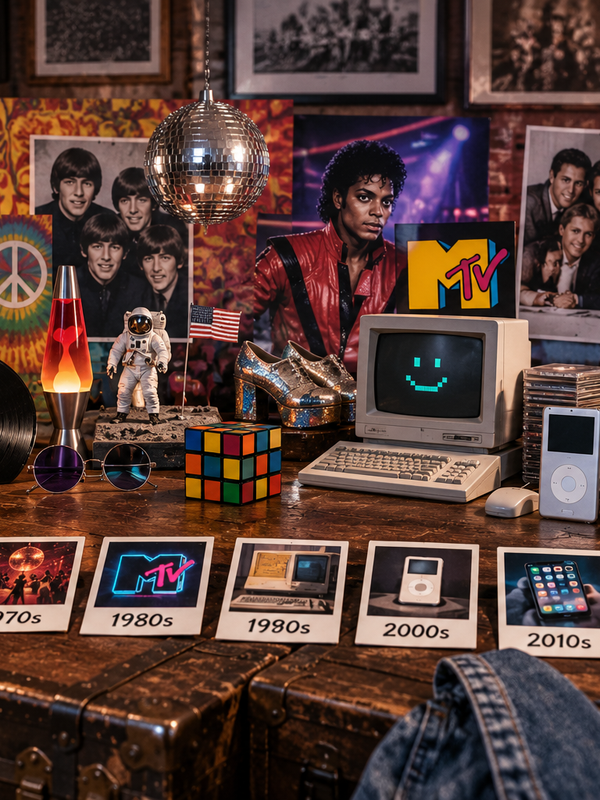
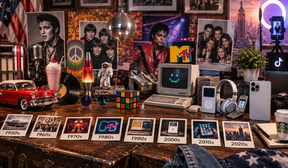
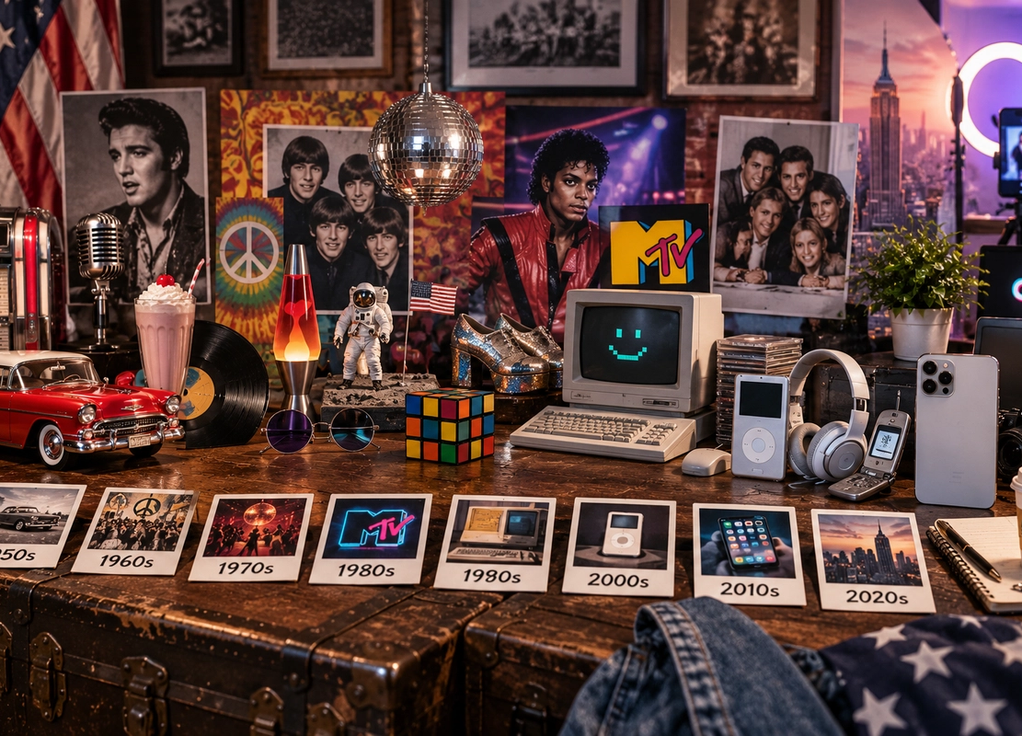
The 1950s had Elvis Presley, diners and enormous automobiles. The 1960s had the Beatles, the moon landing and miniskirts. The 1980s gave us Michael Jackson, MTV and the personal computer. By the 2000s, the iPod and reality television had become symbols of a completely different America.
These icons are not necessarily the most important things that happened during each period. Instead, they are cultural shorthand. They represent what Americans watched, bought, wore, discussed and imagined the future might look like.
Together, they show just how dramatically everyday American life changed in a relatively short period.
The 1950s were defined by cars, television and rock and roll
Postwar America developed a powerful new consumer culture during the 1950s.
The automobile became one of its strongest symbols. Cars grew larger and more expressive, with chrome details, dramatic tailfins and styling designed to make each year’s model look noticeably new.
Cars also helped reshape where Americans lived. Suburbs expanded, highways grew and drive-in restaurants and movie theaters became part of the landscape.
Then there was television.
Millions of households brought television sets into their living rooms, creating a new shared national culture around programs such as I Love Lucy.
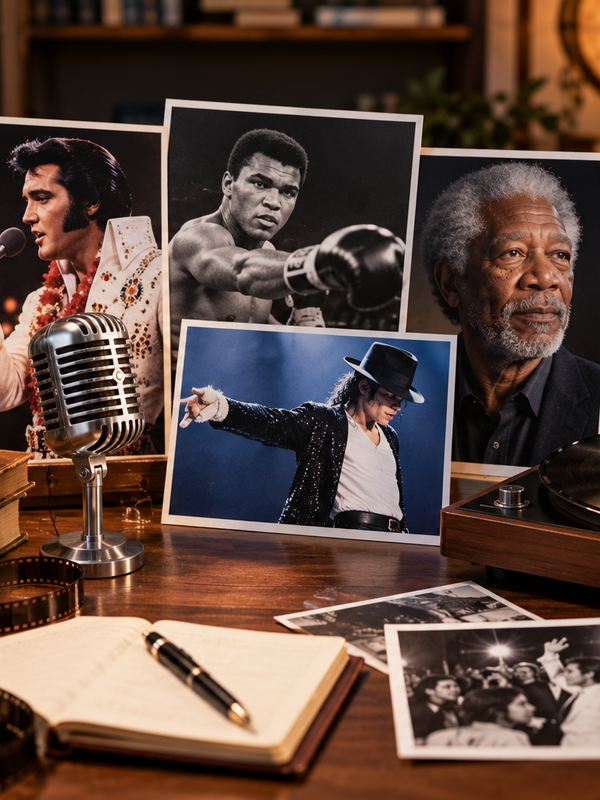
Elvis Presley represented another major shift. His music, appearance and performances helped turn rock and roll into a cultural force and made him an icon of a younger generation eager for something different.
The 1960s made youth culture impossible to ignore
If the 1950s often celebrated stability, the 1960s became associated with change.
The Beatles became enormous stars in the United States after arriving in 1964. Their hairstyles, clothing and evolving music reflected the growing influence of youth culture.
Fashion changed quickly too. Miniskirts and more experimental clothing challenged older expectations, while counterculture styles eventually introduced long hair, denim and psychedelic patterns into mainstream awareness.
Few images captured American ambition more powerfully than the Apollo 11 moon landing in 1969.
Millions watched astronauts walk on the Moon through television screens.
For a country fascinated by technological progress, the event seemed to confirm that the future had arrived.
The 1970s had disco, denim and a very different living room
The 1970s developed one of the most recognizable visual identities of any decade.
Earthy colors filled American homes. Avocado green, brown, orange and mustard yellow appeared on furniture, carpets and kitchen appliances.
Fashion embraced flared jeans, platform shoes and increasingly relaxed styles.
Then disco arrived.
Disco clubs became symbols of nightlife, while Saturday Night Fever helped carry the culture into the mainstream. The mirrored disco ball became an object capable of representing an entire era.
At the same time, technology was quietly preparing another revolution.
Early video game systems and personal computers were beginning to suggest that electronic entertainment would eventually become part of ordinary home life.
The 1980s made everything bigger
The 1980s rarely believed in understatement.
Hair became bigger. Shoulder pads became wider. Entertainment became louder, brighter and more heavily marketed.
MTV, launched in 1981, transformed music into a visual medium for a new generation. Michael Jackson became one of the decade’s defining figures, with videos such as Thriller becoming cultural events.
The personal computer also became an increasingly recognizable household object. Machines from companies such as Apple, IBM and Commodore helped move computing away from specialist environments and into homes and offices.
Meanwhile, the Rubik’s Cube became an international craze, arcade games remained enormously popular and Nike sneakers became increasingly tied to sports and celebrity culture.
Even the shopping mall became an icon.
For teenagers especially, the mall was not simply somewhere to buy things.
It was somewhere to be.
The 1990s combined grunge with the early internet
American culture in the 1990s contained some wonderful contradictions.
Grunge rejected much of the polished excess associated with the previous decade. Flannel shirts, ripped jeans and deliberately casual clothing became fashionable.
At the same time, glossy pop culture remained enormous.
Friends became one of television’s defining shows. Michael Jordan became a global sports icon. Supermodels and blockbuster movies dominated popular culture.
Then the internet began entering ordinary homes.
The desktop computer, dial-up modem and AOL login screen became increasingly familiar parts of family life. Email addresses started appearing on business cards, while websites went from strange novelties to places people actually expected companies to have.
The decade began largely offline.
It ended with millions of people wondering how they had ever lived without the internet.
The 2000s put technology in our pockets
The flip phone may be one of the clearest visual symbols of the early 2000s.
People snapped phones shut to end calls with a level of dramatic satisfaction modern touchscreens simply cannot provide.
The iPod became another defining object. Thousands of songs could suddenly travel in one pocket, while white earbuds became instantly recognizable.
Reality television exploded as well. Shows such as American Idol turned ordinary people into national celebrities, while a growing fascination with celebrity culture fueled tabloids and entertainment websites.
Social networking also began transforming everyday relationships.
MySpace gave users highly personalized profiles, Facebook expanded beyond college campuses and YouTube demonstrated that ordinary people could publish videos for enormous audiences.
Then the iPhone arrived in 2007.
The next decade would look very different.
The 2010s belonged to the smartphone
If one object represents American life during the 2010s, it is probably the smartphone.
It became the camera, map, music player, newspaper, television, shopping center and communication device carried almost everywhere.
Instagram transformed everyday photography. The selfie became a normal part of visual culture. Streaming services changed how people watched television and listened to music.
The decade also created the modern influencer.
Someone no longer needed a movie studio, record label or television network to become famous. An online audience could become a career.
Ride-sharing apps changed transportation in cities. Food-delivery apps changed dinner. Dating apps changed how people met.
The smartphone did not simply become another American icon.
It absorbed many of the icons that came before it.
The 2020s are defined by streaming, creators and artificial intelligence
The cultural symbols of the 2020s are still being decided.
Streaming is now deeply embedded in entertainment. TikTok has become a major force in music, fashion, humor and internet culture. Creators can build enormous audiences without ever appearing on traditional television.
Remote work also became a defining experience early in the decade. Video calls, home offices and laptops on kitchen tables became familiar images during the pandemic and continued influencing workplace culture afterward.
Artificial intelligence has emerged as another major symbol of technological change, particularly as generative tools have entered workplaces, schools and creative industries.
At the same time, older technologies have returned.
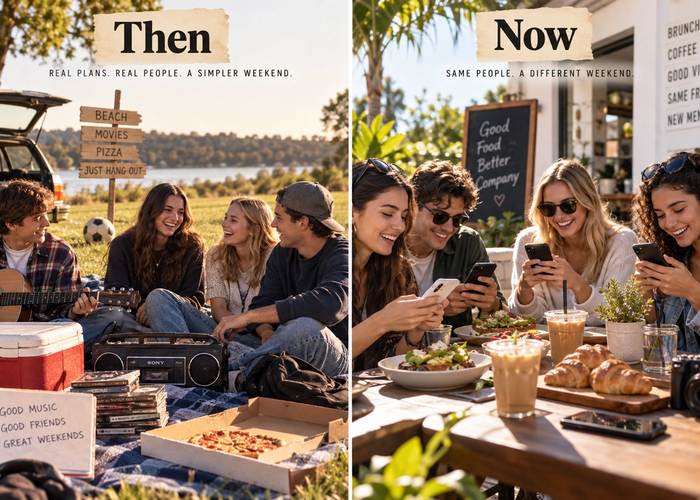
Vinyl records, film cameras and retro fashion have found new audiences.
The future, strangely enough, contains a lot of the past.
Every era eventually becomes a collection of symbols
Living through a decade feels complicated.
Remembering one makes it look surprisingly simple.
We reduce entire periods to a handful of images: Elvis and a Cadillac for the 1950s, a disco ball for the 1970s, MTV for the 1980s, dial-up internet for the 1990s and an iPhone for the 2010s.
Obviously, real life was never that neat.
But icons matter because they capture what felt new, desirable or unavoidable at a particular moment.
Today’s ordinary objects will eventually serve the same purpose.
A future generation may look at our smartphones, streaming interfaces and social media habits and immediately know exactly when we lived.
To them, our normal life will look unmistakably vintage.