Why the Best Stories Are Still Being Told Around Kitchen Tables
Emory Frye
September 9, 2026
Some of the most important stories in a family will never be written down.
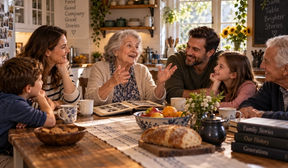
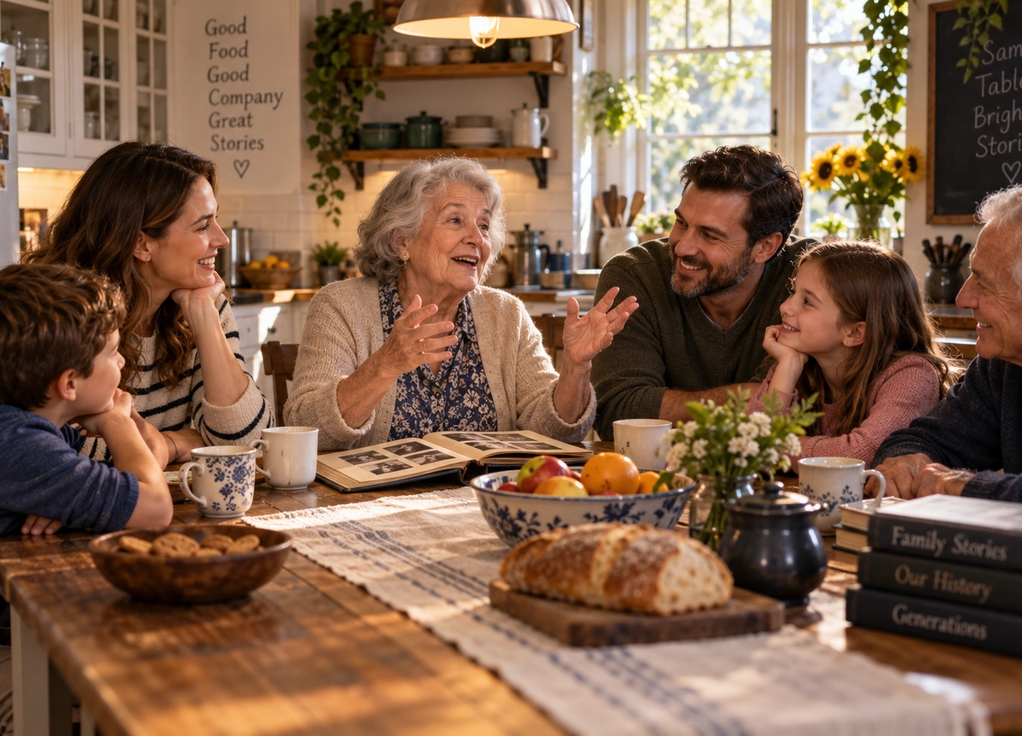
They are told while someone cuts bread, pours coffee or clears plates after dinner. They begin with a question about an old photograph and somehow turn into a story about a first job, a difficult journey, a ridiculous wedding or the relative nobody realized had once done something extraordinary.
Kitchen-table stories rarely arrive in perfect order. Someone interrupts. Another person corrects a detail. The storyteller insists everyone else remembers it wrong. A story that has been told 20 times somehow gets told again.
We now have better ways than ever to record our lives. We take thousands of photographs and videos and leave enormous digital archives behind us.
Yet when families want to understand where they came from, they still tend to end up talking.
Family history lives in ordinary stories
Official records can tell us when someone was born, where they lived, who they married and perhaps what they did for work.
They rarely tell us what that person was actually like.
That information survives through stories.
The grandfather who walked an absurd distance to school. The aunt who secretly hated the family recipe everyone thought she loved. The parents who met because one of them missed a bus.
These details can seem insignificant compared with major historical events.
For families, they often matter more.
They explain personalities, traditions and relationships. They turn names in a family tree into recognizable human beings.
A date tells you when your grandmother got married.
A kitchen-table story tells you that it rained all day, someone lost the rings and she nearly refused to attend because her dress wasn’t ready.
That is the version people remember.
Food gives stories somewhere to happen
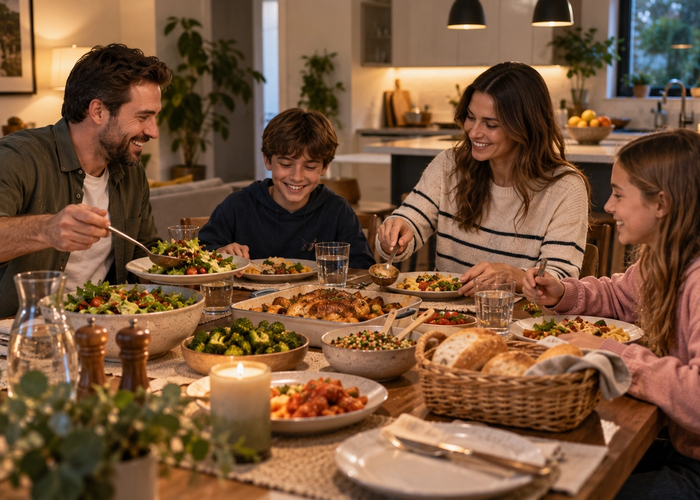
Meals create a natural structure for conversation.
People have to remain in roughly the same place for a while. There are pauses. Hands are occupied with simple tasks. Nobody needs to announce that it is officially time to have a meaningful conversation.
The stories appear naturally.
This is especially true when preparing food together.
Cooking creates small stretches of waiting. Something needs to boil. Dough needs to rest. Vegetables need chopping.
Those spaces invite conversation.
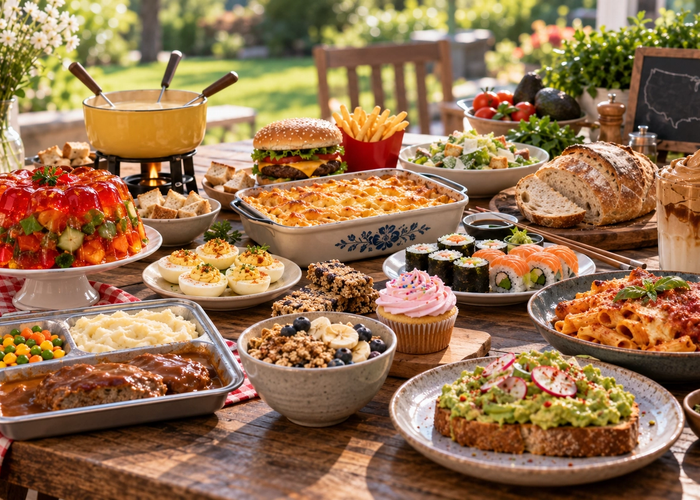
Food can also trigger memories with unusual power.
A familiar smell or recipe can return someone to a kitchen from decades earlier. Suddenly, a person remembers who used to prepare the dish, where everyone sat and what happened during those meals.
The recipe becomes a doorway.
The same story changes depending on who is sitting there
Family stories are rarely fixed.
Ask three siblings about the same childhood event and you may receive three completely different versions.
This is not necessarily because someone is lying.
People notice different things. They remember different details. Over time, certain parts become exaggerated while others disappear.
That makes group storytelling especially interesting.
One person begins.
Another interrupts with, “That’s not what happened.”
Someone else remembers a detail neither of them mentioned.
Eventually, the family reconstructs the event together.
The resulting story may still not be historically perfect.
But the disagreements become part of the tradition.
Sometimes the argument about how something happened lasts longer than the original event.
Children learn who their parents were before becoming parents
One of the strangest experiences of growing up is realizing your parents had entire lives before you existed.
Family stories make those earlier versions visible.
A child discovers that their serious father once skipped school to attend a concert. Their mother had a terrible haircut at 15. Their grandmother moved somewhere alone without knowing anyone.
Suddenly, adults who seemed to have always been adults become teenagers, newlyweds and nervous first-time parents.
That changes how generations understand one another.
Stories reveal that the people giving advice today once made mistakes themselves.
They were embarrassed.
They were uncertain.
They chose the wrong person, took the wrong job or made decisions they later laughed about.
That knowledge can make family history feel less like a collection of respectable ancestors and more like what it actually was: ordinary people figuring things out as they went.
Repeated stories become family mythology
Every family has stories everyone knows.
Someone begins with three words and half the table already knows the ending.
These stories survive because they are repeated.
They might explain how the family arrived in a particular country, how grandparents met or why a strange tradition exists.
Over time, they become something close to mythology.
Details may grow.
The fish becomes larger. The journey becomes harder. The embarrassing mistake becomes even more embarrassing.
That does not necessarily make the stories worthless.
Their importance is often less about perfect historical accuracy and more about what the family has chosen to remember.
A repeated story says, “This is part of who we are.”
Difficult history can emerge there too
Not every kitchen-table story is funny.
Families also carry stories about war, migration, poverty, illness, discrimination, loss and difficult relationships.
These stories may take longer to appear.
Sometimes younger generations grow up knowing that something happened without understanding the details.
Then one evening, years later, someone finally explains.
Informal settings can make difficult conversations possible because there is no pressure to turn them into formal testimony.
A person can pause.
Someone can ask a question.
The conversation can move somewhere else and return later.
For families shaped by major historical events, these conversations can preserve experiences that would otherwise disappear when the people who lived through them are gone.
Phones can record everything except the reason it mattered
Modern families possess extraordinary archives.
A child born today may have thousands of photographs before reaching school age. Birthdays are filmed. Vacations are documented. Messages preserve everyday conversations.
Previous generations often left behind a few albums and boxes of photographs.
Yet digital abundance does not automatically create understanding.
A photograph can show five people sitting around a table.
It cannot necessarily tell you why everyone started laughing 30 seconds later.
A video captures what happened.
A story explains why the family still talks about it 25 years afterward.
We are exceptionally good at recording events.
Meaning still requires someone to explain them.
The kitchen table creates something the internet cannot
Online, stories are often told to audiences.
Around a table, they are told to particular people.
That changes the way they are told.
The storyteller knows what everyone already understands. They can mention a relative without explaining the entire family tree. Someone can interrupt with a question that completely changes the direction of the story.
There is no need for a polished beginning or perfect ending.
The conversation belongs only to the people sitting there.
That intimacy is difficult to reproduce publicly.
The best stories survive because someone keeps telling them
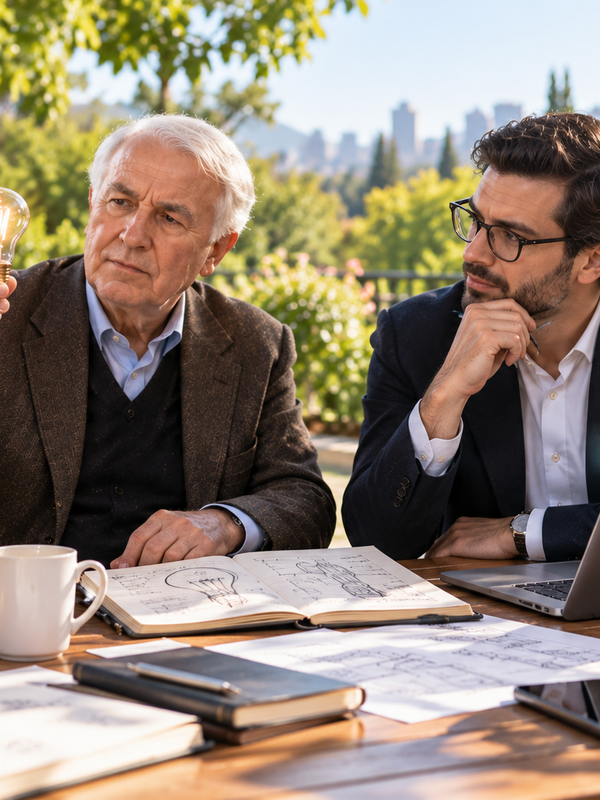
Eventually, every family reaches a point when the original storyteller is no longer there.
Then something interesting happens.
Someone else tells the story.
They imitate the person’s expressions. They remember the details they heard dozens of times. Maybe they get a few things wrong.
A story that once belonged to one person becomes part of the family.
That is how ordinary lives survive.
Not through biographies or monuments, but through repetition.
We have never had more sophisticated tools for preserving information.
Still, some of the things worth remembering most depend on something much older.
Someone asks a question.
Someone else says, “Did I ever tell you about the time…”
And everyone stays at the table a little longer.