The Voices, Faces, and Names We All Remember (And Why)
Emory Frye
September 9, 2026
Some people become so famous that recognizing them feels almost automatic.
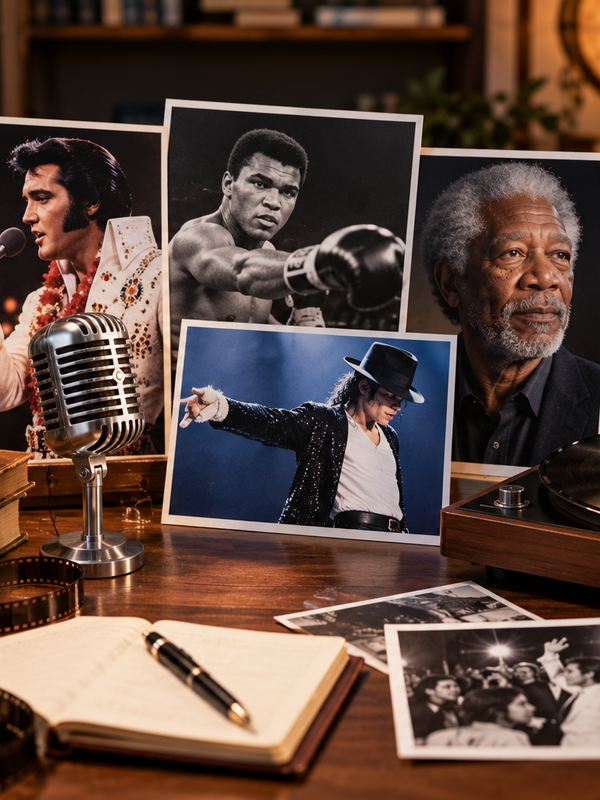
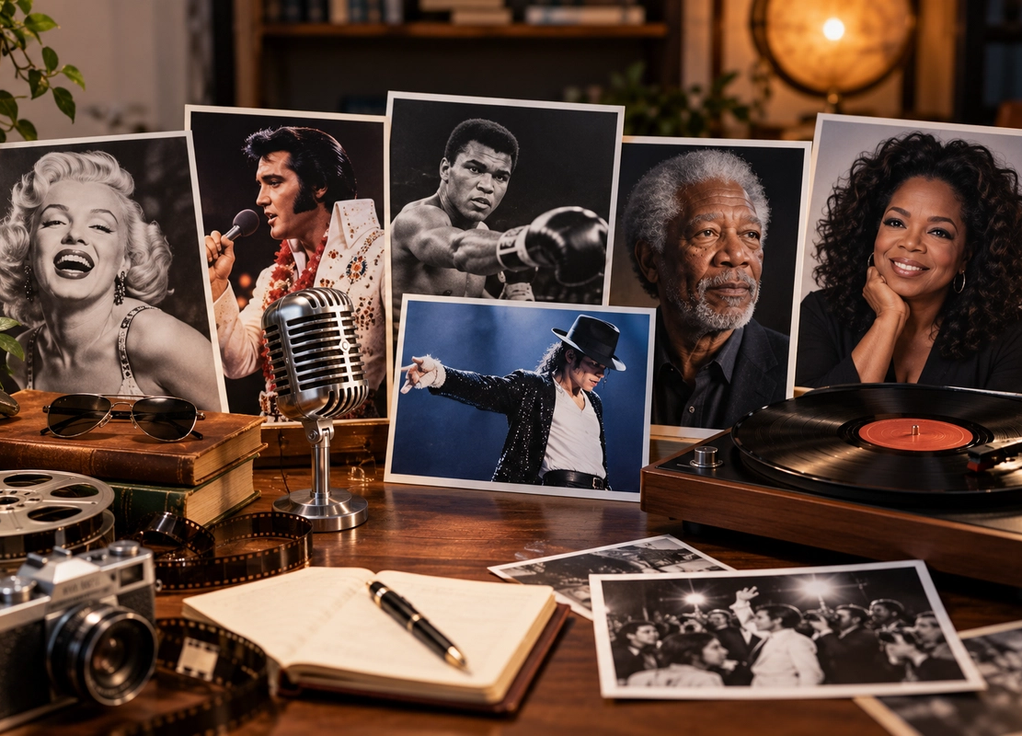
You hear a few seconds of Morgan Freeman’s voice and know exactly who is speaking. You see Marilyn Monroe in an old photograph and recognize her before thinking about which movies she actually made. Names such as Elvis, Oprah and Muhammad Ali can trigger an entire collection of images and associations almost instantly.
That level of recognition is different from ordinary fame. Plenty of people become successful and widely known for a few years. Cultural icons remain recognizable across decades, sometimes to generations born long after their biggest moments.
So why do certain voices, faces and names become permanently lodged in our collective memory while thousands of other famous people gradually disappear?
Marilyn Monroe became an image bigger than her movies
Marilyn Monroe remains one of the most recognizable faces in popular culture more than six decades after her death.
Many people who recognize her instantly could probably name only one or two of her films.
That tells us something important about cultural memory.
Monroe became more than an actress. Her platinum-blonde hair, red lipstick and glamorous photographs created a visual identity that could be reproduced endlessly.
One image became particularly powerful: Monroe standing above a subway grate as her white dress blows upward in The Seven Year Itch.
The photograph and footage became more famous than the scene itself.
Her early death at 36 also froze her public image. Unlike celebrities who grow older in public, Monroe remained permanently connected to the appearance she had at the height of her fame.
Eventually, the image became shorthand for Hollywood glamour itself.
Elvis became recognizable from a silhouette
Elvis Presley achieved something very few celebrities manage.
You can sometimes identify him without seeing his face.
The hair, jumpsuit, sunglasses and performance stance are enough.
That visual consistency helped turn Elvis into an extraordinarily powerful cultural symbol. Impersonators can communicate “Elvis” using only a few details.
His name became equally efficient.
People rarely need to say Elvis Presley. “Elvis” is enough.
The same thing happened with other enormous stars such as Madonna and Beyoncé. Reaching the point where one name identifies you globally is almost its own category of fame.
Elvis also arrived at a perfect cultural moment. Rock and roll was transforming youth culture, television was creating mass audiences and teenagers were becoming an increasingly important consumer group.
He did not simply become famous during that transformation.
He came to represent it.
Muhammad Ali understood that words could create a legend
Muhammad Ali was one of the greatest boxers in history, but athletic achievement alone does not explain his enormous cultural presence.
Ali knew how to speak.
He predicted victories, invented rhymes, mocked opponents and delivered quotes designed to be repeated.
“Float like a butterfly, sting like a bee” survived because it was more than a description of boxing technique. It was memorable language.
Ali’s public identity also extended far beyond sports.
His conversion to Islam, opposition to the Vietnam War and willingness to discuss race made him a major cultural and political figure.
He understood something that would later become central to celebrity culture: performance does not stop when the competition ends.
The press conference can be part of the show.
The interview can build the character.
The name itself can become a brand.
Morgan Freeman shows how a voice becomes an identity
Most celebrities are recognized visually first.
Morgan Freeman is unusual because his voice may be just as famous as his face.
His calm, measured delivery became associated with authority, intelligence and storytelling through decades of acting and narration.
Eventually, the voice itself became a cultural reference.
Imitations work because audiences already understand what a “Morgan Freeman voice” is supposed to sound like.
James Earl Jones achieved something similar.
His performance as the voice of Darth Vader demonstrated how strongly a voice can define a character. The mask concealed the actor’s face, making sound even more important.
A distinctive voice creates a strange kind of immortality.
People can recognize someone without seeing them at all.
Michael Jackson created movements people still recognize
Michael Jackson’s cultural identity was built through sound, appearance and movement simultaneously.
A few notes can identify one of his songs.
A silhouette in a fedora can identify the performer.
And a single dance move can do the same.
The moonwalk became so strongly associated with Jackson that performing it immediately references him, even decades later.
Music videos strengthened that recognition.
Thriller was not simply a successful song. Its video became a cultural event with costumes, choreography and imagery that could be recreated endlessly.
Jackson understood the visual possibilities of the music-video era exceptionally well.
MTV gave musicians a platform where appearance could become almost as important as sound.
He used both.
Oprah became recognizable through familiarity
Not every cultural icon is built around mystery or spectacle.
Oprah Winfrey became famous partly through the opposite: familiarity.
For decades, viewers watched her speak with celebrities, authors and ordinary people on The Oprah Winfrey Show. Her face and voice entered homes almost daily.
Television creates a particular kind of celebrity relationship.
Someone you have never met can begin to feel familiar simply because you have seen them hundreds of times.
Oprah also became influential enough that her name developed meanings beyond the person herself.
A recommendation from her could turn a book into a bestseller. An appearance on her program could become a major cultural moment.
Her first name eventually became sufficient identification.
That is one of the clearest signs that a celebrity has moved beyond fame into cultural shorthand.
Repetition creates recognition
There is a simple reason many older icons remain recognizable.
We keep seeing them.
Marilyn Monroe appears on posters. Elvis appears on T-shirts. Albert Einstein’s photograph is repeatedly used to represent genius. Audrey Hepburn’s image continues appearing in fashion and design.
Every reproduction introduces the person to another generation.
Eventually, some historical figures become disconnected from the specific work that originally made them famous.
Einstein becomes “the genius.”
Monroe becomes “Hollywood glamour.”
Ali becomes “the champion.”
Their identities become symbols.
Once that happens, culture keeps reproducing them because everyone already understands the reference.
The internet may be changing what universal fame looks like
Modern celebrities can reach audiences larger than almost anyone in previous generations.
Yet culture has also become more fragmented.
During the era of three major television networks, enormous portions of the population watched the same programs. Radio stations played many of the same stars. Major movies created genuinely mass audiences.
Today, two people can consume entertainment constantly and barely encounter the same personalities.
One person follows YouTubers. Another watches sports. Someone else lives almost entirely inside a particular corner of TikTok.
Modern fame can be enormous without being universal.
Becoming unforgettable requires more than being famous
The people we remember across generations usually have something that can be compressed into an instantly recognizable signal.
A voice.
A hairstyle.
A movement.
A phrase.
A photograph.
A name.
That signal allows culture to keep passing them forward even when the original context begins disappearing.
Millions of people have been famous.
Far fewer can be recognized from a silhouette, three words or a few seconds of audio.
That is the difference between being known in your time and becoming part of cultural memory.