The Home Design Trends of Every Era (And What Made Them Iconic)
Ryker McGee
September 8, 2026
You can often guess when a house was decorated just by looking at one room.
Avocado-green appliances immediately suggest the 1970s. Floral wallpaper and heavy curtains can transport you even further back. Glass tables, chrome details and bold geometric patterns belong unmistakably to certain decades, while the white kitchens and gray interiors of more recent years are already becoming markers of their own era.
Interior design rarely changes randomly. Homes reflect new technology, economic conditions, changing family life and whatever people at the time considered modern, comfortable or luxurious.
Some trends disappeared almost immediately. Others keep returning under new names. Together, they tell a surprisingly detailed story about how people wanted to live.
The 1920s and 1930s brought glamour into the home
The Art Deco movement gave the 1920s and 1930s some of the most recognizable interiors in design history.
Rooms embraced symmetry, geometric shapes, polished surfaces and luxurious materials. Mirrors, brass, lacquered furniture and rich colors created interiors that felt glamorous and modern.
The style was closely connected to a broader fascination with machines, travel and progress. Skyscrapers, ocean liners and Hollywood glamour all influenced the way modernity was imagined.
Even ordinary households that could not afford elaborate Art Deco interiors could adopt pieces of the look through lighting, furniture and decorative objects.
Then the Great Depression changed priorities for many families. Practicality became increasingly important, and the extravagance associated with the previous decade became harder to justify.
Still, Art Deco never completely disappeared. Its distinctive combination of geometry and glamour continues to return whenever designers want an interior to feel sophisticated without looking traditional.
The 1940s and 1950s made the home optimistic
After World War II, home design increasingly reflected optimism about the future.
The 1950s became especially associated with mid-century modern design. Furniture became cleaner and simpler, with tapered legs, smooth curves and less ornamentation than earlier styles.
New materials also entered the home.
Plastic, vinyl and Formica allowed furniture and kitchen surfaces to appear in bright colors and new shapes. Kitchens embraced cheerful shades such as turquoise, pink and yellow.
The home was increasingly filled with appliances too. Refrigerators, washing machines, televisions and other technologies became symbols of modern convenience.
Design reflected the idea that technology would make everyday life easier.
Today, original mid-century furniture can be highly desirable, which is slightly amusing considering much of it was originally designed to make modern furniture simpler and more accessible.
The 1960s experimented with color and shape
If the 1950s were controlled and optimistic, the 1960s became much more playful.
Bright colors, unusual furniture and graphic patterns appeared throughout interiors. Pop art and space-age design influenced everything from lighting to chairs.
Furniture could suddenly look futuristic.
Rounded shapes and molded plastics allowed designers to create objects that would have been difficult to manufacture using traditional materials. Orange, yellow, red and green appeared in combinations that would make many modern minimalist interiors nervous.
The decade also introduced a more informal attitude toward living spaces.
Homes did not always need to look serious or formal. They could be expressive, youthful and fun.
That willingness to experiment would become even more extreme in the following decade.
The 1970s brought nature indoors
Few decades have a visual identity as strong as the 1970s.
Brown, orange, mustard yellow and avocado green dominated interiors. Wood paneling covered walls. Shag carpets covered floors. Macramé hung from ceilings, and houseplants appeared everywhere.
The overall effect was warm, earthy and occasionally overwhelming.
Natural materials became increasingly popular, reflecting broader interest in environmentalism and a desire to move away from some of the synthetic futuristic aesthetics of the previous decade.
Open-plan living also became more common, while conversation pits represented perhaps the ultimate 1970s social space.
For years, many of these choices were treated as examples of terrible outdated design.
Then something unexpected happened.
Houseplants, earthy colors, rattan furniture and macramé all returned.
Apparently, the 1970s were not finished with us.
The 1980s believed more was more
The 1980s rarely approached design quietly.
Interiors embraced glossy surfaces, glass furniture, brass details, pastel colors and dramatic patterns. Depending on the household, the look could range from corporate luxury to floral country style.
Memphis design introduced wildly colorful geometric furniture and objects that rejected conventional ideas about good taste.
At the same time, many homes leaned heavily into softer decoration. Floral sofas, matching curtains, decorative borders and generous amounts of fabric created rooms that were anything but minimal.
Technology was becoming more visible too.
Large televisions, stereo systems and entertainment centers became important pieces of furniture. Instead of hiding electronics, homes increasingly needed to organize themselves around them.
The 1990s made everything comfortable
After the visual excess of the 1980s, many 1990s interiors became softer and more relaxed.
Beige became extremely powerful.
Neutral walls, oversized sofas, light woods and comfortable furniture created homes designed around casual living. Country-inspired kitchens were popular, as were floral patterns and decorative touches that made new houses feel older.
At the same time, minimalist influences were beginning to appear.
Some interiors embraced cleaner lines, simpler furniture and fewer decorative objects. IKEA’s expanding international influence helped introduce affordable Scandinavian design to enormous audiences.
The decade existed somewhere between traditional coziness and the cleaner aesthetic that would dominate the early twenty-first century.
The 2000s loved open plans and statement kitchens
During the 2000s, the kitchen increasingly became the center of the home.
Open-plan layouts connected kitchens, dining areas and living rooms into large shared spaces. Kitchen islands grew larger. Stainless-steel appliances became desirable, while granite countertops seemed to appear in almost every renovation.
Tuscan-inspired interiors also became popular in many homes, particularly in the United States. Warm beige walls, dark wood, wrought iron and earthy finishes created an intentionally aged Mediterranean look.
By the end of the decade, however, tastes were shifting again.
Interiors were becoming brighter, cleaner and much less brown.
The 2010s turned homes gray, white and Instagram-ready
The 2010s were the decade of highly shareable interiors.
White kitchens, gray walls, subway tiles and open shelving appeared everywhere. Scandinavian minimalism became enormously influential, emphasizing light, simple furniture and uncluttered spaces.
Then came farmhouse style.
Shiplap walls, barn doors, rustic signs and white cabinetry transformed homes far beyond actual farms.
Social media accelerated trends by allowing the same interior ideas to circulate globally. Instead of discovering design primarily through magazines or television, people could save thousands of inspiration images online.
Homes increasingly needed to look good in photographs as well as in person.
Today’s homes are becoming warmer and more personal
The 2020s have already begun reacting against some of the cooler minimalism of the previous decade.
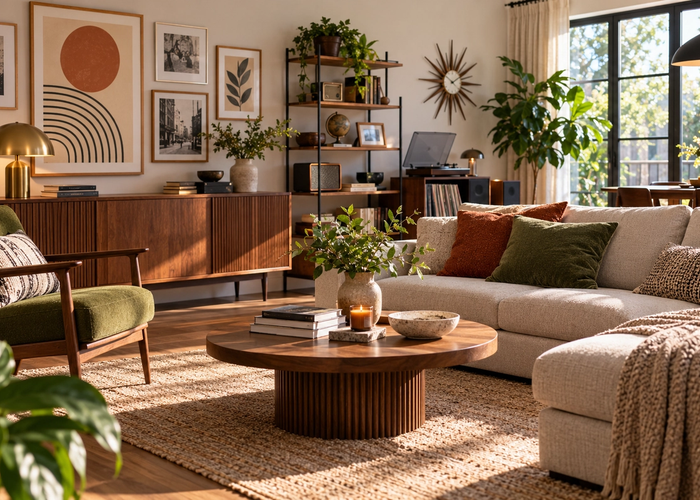
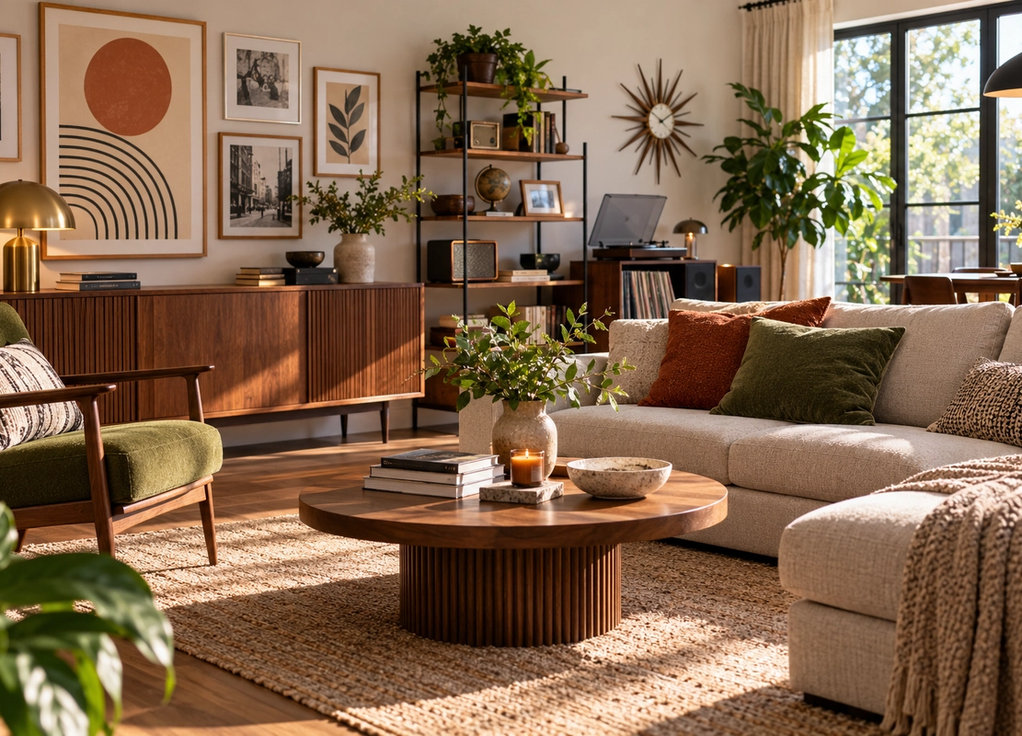
Warmer woods, textured fabrics, curved furniture and stronger colors have returned. Vintage pieces are increasingly mixed with new furniture rather than everything coming from one matching collection.
There is also renewed interest in interiors that feel personal.
Books, artwork, collected objects and imperfect handmade pieces are appearing in spaces that might once have been designed to look completely uncluttered.
Even wallpaper has returned after spending years associated with outdated homes.
The broader trend seems to be moving away from interiors that resemble showrooms and toward homes that actually look lived in.
Every outdated trend eventually gets another chance
Interior design has a funny relationship with time.
One generation removes wood paneling because it looks old. Another installs it because it feels warm and authentic. Wallpaper gets stripped away and then carefully added back. Brass goes from glamorous to dated and eventually becomes glamorous again.
Very few design ideas disappear permanently.
What changes is the context around them.
That is why photographs of old homes are so fascinating. The rooms reveal what people once imagined comfort, sophistication and modernity should look like.
Today’s perfectly fashionable interior will eventually look unmistakably 2020s too.
Give it another few decades, and someone will probably decide it is vintage.