The Foods That Defined Every Decade in America
Raya Hawkins
September 8, 2026
Food trends can tell you almost as much about an era as its music, fashion or movies.
What Americans ate changed alongside technology, immigration, advertising, economic conditions and ideas about health. Some decades embraced convenience above everything else. Others became obsessed with dieting, international flavors or elaborate restaurant culture. Foods that once seemed incredibly modern eventually became outdated, only to return years later as nostalgic favorites.
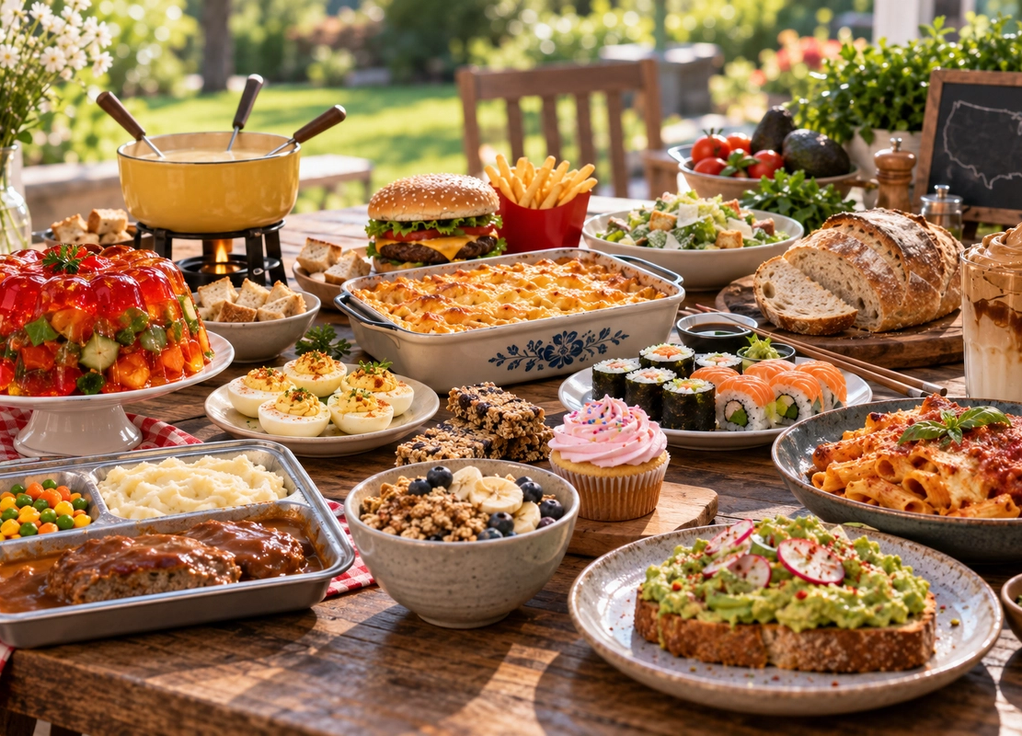
From gelatin molds and TV dinners to avocado toast and viral recipes, every generation has left something recognizable on the American table.
The 1950s made convenience feel futuristic
Postwar America became fascinated with convenience.
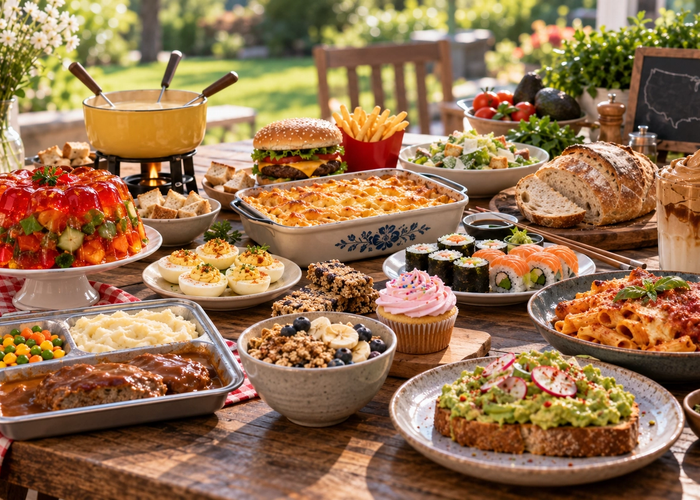
New kitchen appliances and increasingly sophisticated food manufacturing promised to reduce the amount of time required to prepare meals. Frozen dinners became one of the clearest symbols of that change.
The TV dinner fit perfectly into the emerging lifestyle. A complete meal could be heated and eaten from a divided tray, often while the family watched the increasingly important television sitting in the living room.
Casseroles were everywhere too. Canned soups, packaged ingredients and frozen vegetables could be combined into filling meals with relatively little effort.
Then there were gelatin salads.
Modern diners may struggle to understand the enthusiasm for suspending vegetables, fruit and occasionally meat inside colorful gelatin, but elaborate molded dishes were once considered impressive.
Processed food did not necessarily feel cheap or undesirable. It felt modern.
The 1960s turned entertaining into a performance
Dinner parties became an important part of middle-class social life during the 1960s.
Fondue captured the spirit perfectly. A pot of melted cheese surrounded by guests dipping pieces of bread felt sophisticated, international and interactive.
Cocktail parties encouraged another category of food: small appetizers designed to be eaten while socializing. Deviled eggs, cocktail sausages and various foods held together with toothpicks became familiar sights.
American cooking was also becoming more curious about international cuisines, although many dishes were heavily adapted for domestic tastes.
Julia Child helped introduce French cooking techniques to enormous television audiences, demonstrating that ambitious European dishes could be attempted in American kitchens.
Food was becoming entertainment as well as nourishment.
The 1970s embraced earthy food and big experimentation
The 1970s had competing food personalities.
On one side were convenience products and elaborate party dishes. On the other was a growing interest in natural foods.
Granola became strongly associated with health-conscious eating. Whole grains, sprouts and vegetarian dishes gained popularity among people looking for alternatives to heavily processed foods.
The decade also embraced quiche, carrot cake and increasingly adventurous home cooking.
At the same time, fast-food chains were expanding across the country.
This created a contradiction that would become familiar in American food culture: growing interest in healthier eating alongside growing access to extremely convenient restaurant food.
Both trends would become much bigger.
The 1980s made food bigger, richer and more fashionable
The 1980s approached food with the same enthusiasm it brought to fashion.
Restaurant culture expanded, and certain dishes became symbols of sophistication. Sun-dried tomatoes seemed capable of making almost anything fashionable. Pasta salads appeared everywhere, while nouvelle cuisine influenced upscale restaurants.
At home, microwave ovens were transforming everyday cooking.
Frozen meals became faster to prepare, microwave popcorn became a movie-night staple and reheating leftovers became almost effortless.
The decade also experienced a major fitness and dieting boom. Low-fat products began appearing as consumers became increasingly concerned about dietary fat.
Meanwhile, fast food continued growing.
The American diet was becoming simultaneously more health-conscious and more convenient.
That contradiction wasn’t going anywhere.
The 1990s were obsessed with low fat
If one phrase defined mainstream diet culture in the 1990s, it was probably “fat-free.”
Supermarket shelves filled with reduced-fat cookies, snacks, yogurt and other products marketed as healthier alternatives. Consumers were encouraged to examine fat content closely, sometimes while paying considerably less attention to sugar.
Bagels became enormously popular. Caesar salads appeared on restaurant menus everywhere. Smoothies started moving toward the mainstream.
The decade also saw foods such as sun-dried tomatoes gradually give way to newer fashionable ingredients.
American tastes were becoming more international too.
Sushi became increasingly familiar outside major coastal cities, while Mexican, Thai and other cuisines became more widely available.
The definition of ordinary American food was expanding.
The 2000s discovered cupcakes and celebrity chefs
Food culture became entertainment during the 2000s.
Television networks devoted entire schedules to cooking, while chefs became celebrities with restaurants, cookbooks and recognizable personalities.
Cupcakes became an unlikely cultural phenomenon. Specialty bakeries transformed a simple dessert into something fashionable enough to inspire long lines and endless variations.
The decade also embraced brunch more enthusiastically, while coffee culture continued expanding beyond basic drip coffee.
At the same time, Americans became increasingly interested in where food came from.
Organic products moved further into mainstream supermarkets. Farmers markets attracted new audiences. Terms such as “local” and “artisanal” became powerful marketing language.
Food was becoming part of personal identity.
What you ate could communicate something about who you were.
The 2010s made food extremely photogenic
Then Instagram arrived at the table.
Suddenly, food did not simply need to taste good. It could also benefit from looking impressive on a phone screen.
Avocado toast became perhaps the decade’s most famous example. It was simple, colorful, endlessly customizable and unusually photogenic.
Other trends followed.
Açaí bowls, elaborate milkshakes, rainbow-colored foods and beautifully arranged brunch dishes spread rapidly through social media.
Food trucks also became an important part of urban food culture, allowing chefs to experiment with cuisines and combinations without traditional restaurant spaces.
Meanwhile, dietary trends multiplied. Gluten-free products expanded dramatically, plant-based eating attracted more attention and alternatives to traditional dairy and meat products became increasingly visible.
There was no longer one dominant definition of healthy eating.
There were dozens competing for attention.
The 2020s turned recipes into viral content
Social media became even more influential over food during the 2020s.
TikTok could turn an ordinary recipe into an international trend almost overnight. Baked feta pasta, whipped coffee and countless other dishes spread because millions of people could watch someone make them in less than a minute.
The pandemic also temporarily pushed enormous numbers of people back into their kitchens.
Sourdough bread became an unexpected obsession as people suddenly had time to maintain starters and experiment with baking.
Air fryers became another defining kitchen phenomenon, promising crisp food with convenience somewhere between an oven and a countertop appliance.
Meanwhile, nostalgia returned.
Old recipes, retro cocktails and childhood snacks gained new audiences online. Foods did not have to be new to become trendy anymore.
Sometimes being forgotten for 30 years was enough.
American food keeps absorbing every era
There is no single American cuisine, and that may be the most important part of the story.
Every decade adds something.
Immigration introduces new ingredients and traditions. Technology changes how meals are prepared. Restaurants transform regional foods into national favorites. Social media can now turn a dish from one corner of the world into something people attempt in kitchens thousands of miles away.
Some trends disappear quickly. Others quietly become normal.
Sushi once seemed adventurous to many American diners. Espresso drinks once required finding a particular kind of café. Avocados were not always available everywhere year-round.
Eventually, yesterday’s trend becomes today’s grocery list.
And somewhere, probably, someone is preparing a gelatin salad and waiting for its comeback.