The Ordinary People Who Changed History Without Trying
Raya Hawkins
September 9, 2026
They make decisions, lead movements and appear in photographs that eventually end up in textbooks.
But history is also full of people who never expected to become historical figures at all.
Some were workers going to their jobs. Others were passengers trying to get home, students attending school or ordinary citizens who happened to be in a particular place at exactly the right moment. A small decision, an act of courage or even a complete accident ended up influencing events far beyond their own lives.
They remind us that history does not always announce itself before it happens. Sometimes an ordinary day becomes important only when people look back on it years later.
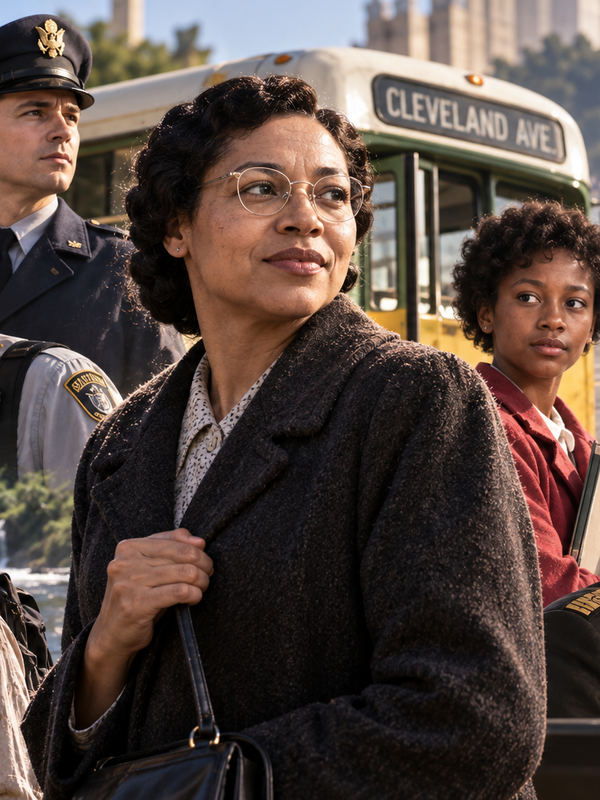
Rosa Parks was simply refusing to move
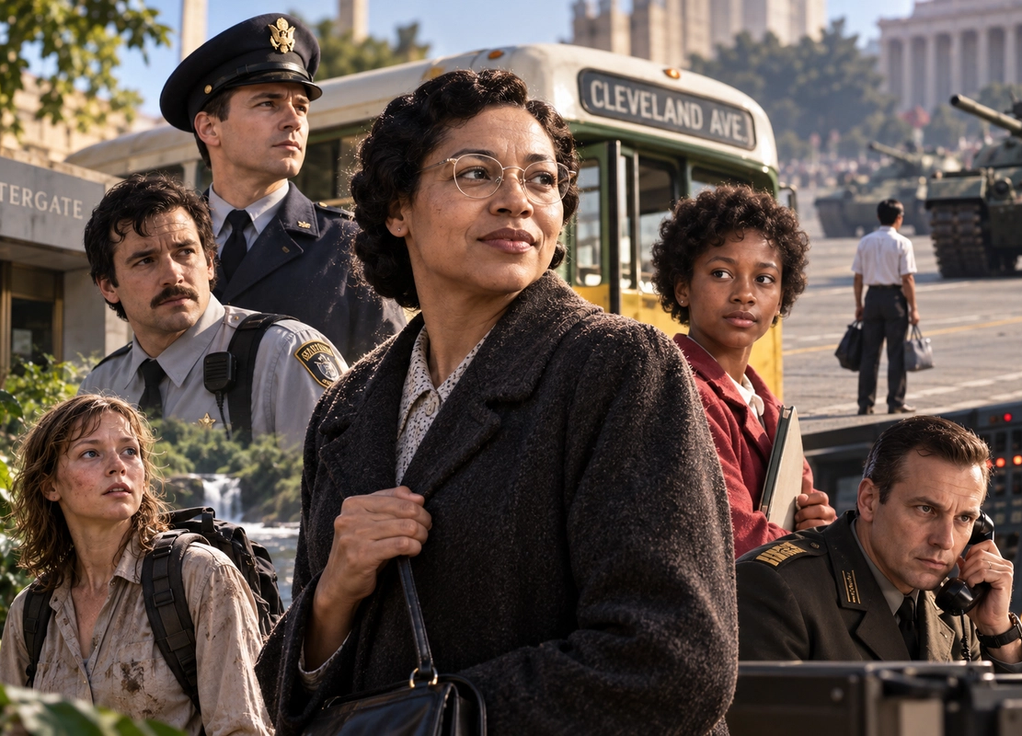
On December 1, 1955, Rosa Parks boarded a bus in Montgomery, Alabama, after work.
When she refused to give up her seat to a white passenger, she was arrested under the city’s segregation laws.
The moment is sometimes presented as though Parks was simply a tired woman who spontaneously decided she had had enough. The reality is more complicated. Parks had been involved in civil rights activism for years and served as secretary of the local NAACP chapter.
Still, she could hardly have known exactly what would follow that particular bus ride.
Her arrest helped trigger the Montgomery Bus Boycott, during which Black residents refused to use the city’s buses for more than a year. The protest became a major moment in the American civil rights movement and helped bring national attention to a young Martin Luther King Jr.
One woman’s refusal became part of a movement that transformed American law and society.
Claudette Colvin refused months earlier
Rosa Parks was not the first Black woman in Montgomery to refuse to surrender her bus seat.
Nine months earlier, 15-year-old Claudette Colvin did the same thing.
On March 2, 1955, Colvin was riding home from school when she refused an order to give up her seat. Police arrested her.
Her story did not initially become the national symbol that Parks’ case later became, but Colvin still played an important role in dismantling bus segregation.
She became one of the plaintiffs in Browder v. Gayle, the federal court case that challenged segregated buses in Montgomery.
Colvin’s story is a useful reminder of how history actually works.
The person who becomes the symbol of a movement is not always the first person who acted.
Sometimes change is built through many similar acts of resistance until one becomes impossible for society to ignore.
Stanislav Petrov decided not to trust a computer
One of the most consequential individual decisions of the twentieth century happened inside a Soviet military facility.
In 1983, Stanislav Petrov was the duty officer monitoring an early-warning system designed to detect American nuclear missile launches.
The system suddenly reported that a missile had been launched toward the Soviet Union. Then it indicated additional launches.
Petrov had to decide whether the warning was genuine.
Instead of immediately treating the alert as a confirmed American attack, he judged that something was wrong. The number of reported missiles did not make sense to him as the beginning of a full nuclear strike.
He was correct.
The warning had been caused by a technical error.
Petrov did not single-handedly “save the world” in the simple way the story is sometimes told, since additional procedures and decision-makers existed. But his judgment helped prevent a false warning from escalating during an extremely tense period of the Cold War.
He went to work that day as a military officer.
He became famous because he chose not to blindly trust what a machine told him.
Vasili Arkhipov made another terrifying decision
Petrov was not the only relatively unknown Soviet officer whose judgment became enormously important.
During the Cuban Missile Crisis in 1962, Soviet submarine B-59 was being pursued by American naval forces.
The submarine’s crew had been underwater and had limited information about what was happening above them. American ships were dropping signaling depth charges intended to force the submarine to surface.
Some Soviet officers feared that war might already have begun.
The submarine carried a nuclear torpedo.
Launching it required agreement among senior officers aboard. Vasili Arkhipov opposed using the weapon.
The submarine eventually surfaced instead.
Nobody aboard could have known exactly what would have happened if a nuclear weapon had been launched against American forces during one of the most dangerous moments of the Cold War.
Arkhipov’s refusal ensured the world never had to find out.
Tank Man became a symbol without a known name
Some of history’s most recognizable people remain unidentified.
On June 5, 1989, following the Chinese government’s violent crackdown around Tiananmen Square, a man carrying shopping bags stepped in front of a column of tanks in Beijing.
When the lead tank attempted to move around him, he moved with it.
Photographs and video of the confrontation spread internationally.
The man’s identity and ultimate fate have never been conclusively established publicly.
Yet the image became one of the most recognizable photographs of the twentieth century.
What makes it powerful is precisely how ordinary he appears.
He does not look like a soldier or political leader.
He looks like someone who had been shopping.
For a few minutes, one anonymous person standing in a road became an international symbol of resistance.
Frank Wills noticed something strange at work
Frank Wills was a 24-year-old security guard working the night shift at the Watergate office complex in Washington, D.C., in June 1972.
During his rounds, he noticed tape covering a door latch.
He removed it.
Later, he noticed that the door had been taped again.
Instead of ignoring it, Wills contacted police.
Officers discovered five men inside the Democratic National Committee headquarters.
That burglary eventually became part of the Watergate scandal, which exposed abuses connected to President Richard Nixon’s administration and ultimately contributed to Nixon’s resignation in 1974.
Wills had not been conducting a political investigation.
He was doing his job.
The decision to pay attention to a suspicious door helped uncover one of the biggest political scandals in American history.
Juliana Koepcke survived the impossible
Not every ordinary person changes history through politics.
Sometimes survival itself becomes historically remarkable.
In 1971, 17-year-old Juliane Koepcke was traveling on a commercial flight over Peru when the aircraft broke apart during a severe storm.
She fell thousands of feet while still strapped to a row of seats and somehow survived.
Injured and alone in the Amazon rainforest, Koepcke used knowledge she had learned from her biologist parents to follow water downstream.
After more than a week, she found help.
Her survival became one of aviation history’s most extraordinary stories and later influenced books, documentaries and research into survival.
Koepcke did not set out to become an adventurer.
She was a teenager traveling with her mother.
History found her anyway.
History often begins with someone doing one small thing
What connects these people is not that they were completely ordinary in every respect.
Some were activists. Some had specialized training. Some found themselves in extraordinary professional situations.
What connects them is that none began the day knowing they were about to enter history.
One person refused to move. Another questioned an alarm. Someone noticed tape on a door. Someone else simply stood in front of a tank.
We tend to imagine historical moments as obviously important while they are happening.
Often, they are not.
They look like a bus ride, a night shift, a routine military watch or a walk down an ordinary street.
Only afterward do we understand how much depended on what one person decided to do next.