The Gadgets We Loved in the 2000s (And Why They Disappeared)
Ryker McGee
September 8, 2026
The 2000s were an incredible decade for gadgets because, for a brief moment, almost every digital activity seemed to require its own device.
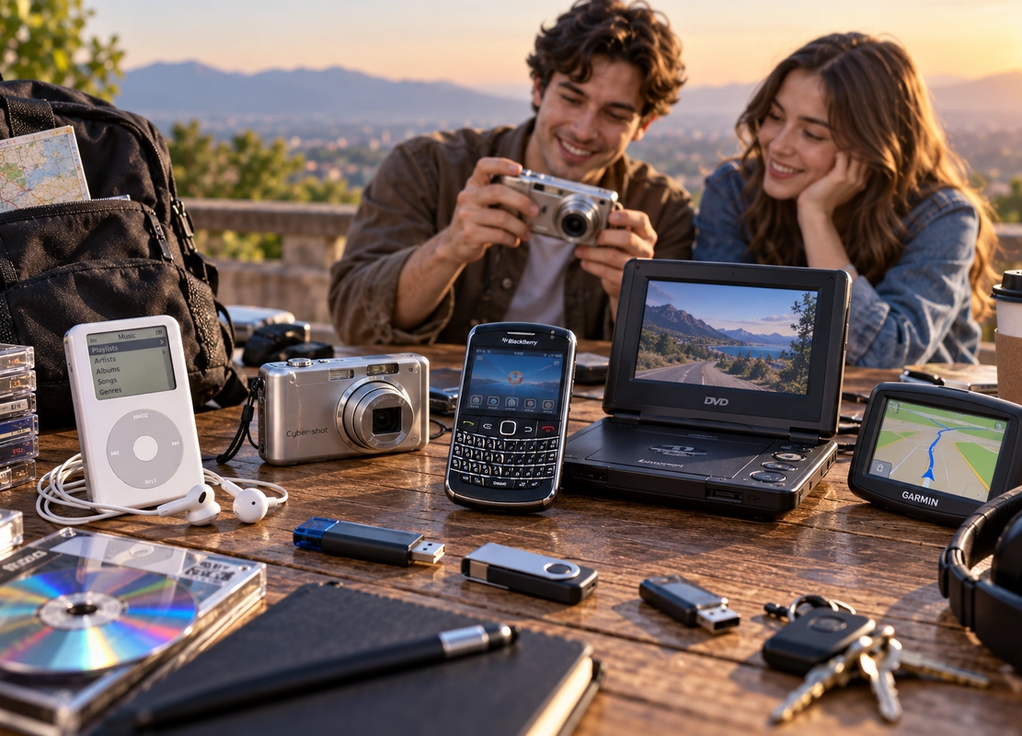
Want to listen to music? Grab your MP3 player. Take pictures? Bring a digital camera. Find your way somewhere? You might need a GPS unit. Watch a movie on a flight? Portable DVD player. Send messages? Depending on the year and your level of seriousness, you probably wanted a BlackBerry.
Our pockets, backpacks and glove compartments were basically collections of single-purpose electronics.
Then the smartphone arrived and started eating them one by one.
Some 2000s gadgets disappeared because better technology replaced them. Others were absorbed into devices we already carried. A few simply belonged to a very specific technological moment that couldn’t last forever.
But while they were around, we absolutely loved them.
MP3 players put thousands of songs in our pockets
Before streaming, having a massive digital music collection felt almost magical.
MP3 players existed in many shapes and sizes, but the iPod became the defining gadget of the era. Instead of carrying a portable CD player and a wallet full of discs, you could store hundreds or eventually thousands of songs on one tiny device.
There was also something wonderfully personal about it.
You built your own music library. You organized playlists. You carefully decided which songs deserved limited storage space. People swapped MP3 files, downloaded tracks from questionable corners of the internet and spent ridiculous amounts of time organizing music libraries on their computers.
Then smartphones absorbed the MP3 player’s main function, while streaming changed how we consumed music entirely.
Why carry a dedicated music player when the phone in your pocket could access millions of songs?
The MP3 player didn’t fail. In a way, it succeeded so completely that its best ideas became standard features of another device.
Digital cameras made everyone a photographer
For a while, no holiday, birthday or night out was complete without someone carrying a small digital camera.
Compact cameras were a huge upgrade over film for ordinary users. You could take hundreds of pictures, immediately check whether someone’s eyes were closed and delete the terrible ones without wasting anything.
The experience had its quirks. Memory cards filled up. Batteries died at exactly the wrong moment. Photos had to be transferred to a computer using cables or card readers. And entire collections could disappear into mysterious folders with names like “DCIM.”
Still, digital cameras changed photography forever.
What killed the compact camera wasn’t a lack of interest in photography. It was the opposite.
People wanted to take more photos and share them faster. Smartphone cameras eventually became good enough that carrying a separate camera stopped making sense for most people.
Dedicated cameras survived, of course, especially for enthusiasts and professionals. But the little silver point-and-shoot that once appeared at every party largely vanished.
Portable DVD players briefly made travel amazing
There was a period when watching a movie in the back seat of a car felt like unbelievable luxury.
Portable DVD players usually looked like tiny laptops with thick screens. You opened one, inserted a disc and suddenly a long road trip became significantly easier.
For families in particular, they were revolutionary.
The problems become obvious from a modern perspective. You had to carry physical DVDs. Battery life wasn’t always great. Screens were small. Discs could skip if the player moved too much.
Tablets and smartphones eventually made the entire concept unnecessary.
Why bring a DVD player and several discs when one tablet could store or stream dozens of movies and TV episodes?
Portable DVD players weren’t around for very long, but they represented an important transition: entertainment was becoming something people expected to take anywhere.
GPS devices saved us from printing directions
Before smartphone navigation, getting somewhere unfamiliar required actual preparation.
People printed directions from websites such as MapQuest, wrote instructions on paper or kept enormous road maps in their cars. Missing a turn could quickly become an adventure.
Then standalone GPS navigation devices arrived.
Brands such as Garmin and TomTom gave drivers a little screen that knew where they were and told them where to go. Suddenly, getting lost became much harder.
The GPS unit became a common sight attached to car windshields throughout the 2000s.
Its disappearance was almost inevitable once smartphones gained reliable GPS capabilities. Apps could provide maps, traffic information, business listings and constantly updated routes without requiring another piece of hardware.
Standalone GPS devices still exist, particularly for specialized uses, but for most drivers, the smartphone completely replaced them.
BlackBerry made mobile messaging feel serious
Before smartphones became giant touchscreen rectangles, BlackBerry had convinced millions of people that the coolest thing you could possibly have was a tiny physical keyboard.
And honestly, those keyboards were fantastic.
BlackBerry devices were especially popular among professionals because they made email genuinely practical on the move. BlackBerry Messenger also developed a devoted following, especially as instant mobile communication became increasingly important.
For a while, being constantly reachable through email was such a novelty that BlackBerry devices earned the nickname “CrackBerry.”
Then the smartphone market changed.
Touchscreens improved. App ecosystems exploded. Phones became entertainment devices, cameras, browsers and navigation systems in addition to communication tools. BlackBerry’s strengths suddenly looked narrow compared with what newer smartphones could offer.
The physical keyboard, once considered essential, became another casualty of the touchscreen.
USB flash drives were absolutely everywhere
If you went to school or worked in an office during the 2000s, there was a good chance you had a USB flash drive attached to your keys.
They replaced floppy disks and made transferring files wonderfully simple. A tiny stick could hold assignments, photos, presentations and increasingly large collections of documents.
They were also incredibly easy to lose.
For years, “Did you bring the USB?” was a completely normal question.
Cloud storage gradually reduced the need for them. Files could suddenly follow you between computers without physically carrying anything. Email, shared drives and online collaboration tools made transferring documents easier still.
USB drives haven’t disappeared completely, but they went from everyday necessity to something many people only occasionally need.
The smartphone became the gadget that replaced the gadgets
The strange thing about 2000s gadgets is that most of them didn’t disappear because people stopped wanting what they offered.
We still listen to music constantly. We take more photographs than ever. We watch videos everywhere. We use GPS every day. We send messages constantly and carry enormous amounts of digital information with us.
What disappeared was the need for separate hardware.
The smartphone became the MP3 player, camera, GPS navigator, portable video player, messaging device and much more.
That’s what makes looking back at 2000s technology so fun. It was perhaps the last era when our gadgets visibly revealed what we were doing. Headphones connected to an iPod meant music. A camera meant photos. A GPS on the windshield meant navigation.
Today, nearly all of those activities begin the same way.
We pull out our phones.