The Rise and Fall of the Home Computer (From Commodore to Modern PC)
Raya Hawkins
September 8, 2026
There was a time when owning a computer at home was exciting enough to be a hobby by itself.
You didn’t simply use a computer. You learned how it worked. You installed programs, swapped disks, typed mysterious commands and occasionally opened the case to replace something you probably weren’t entirely qualified to replace.
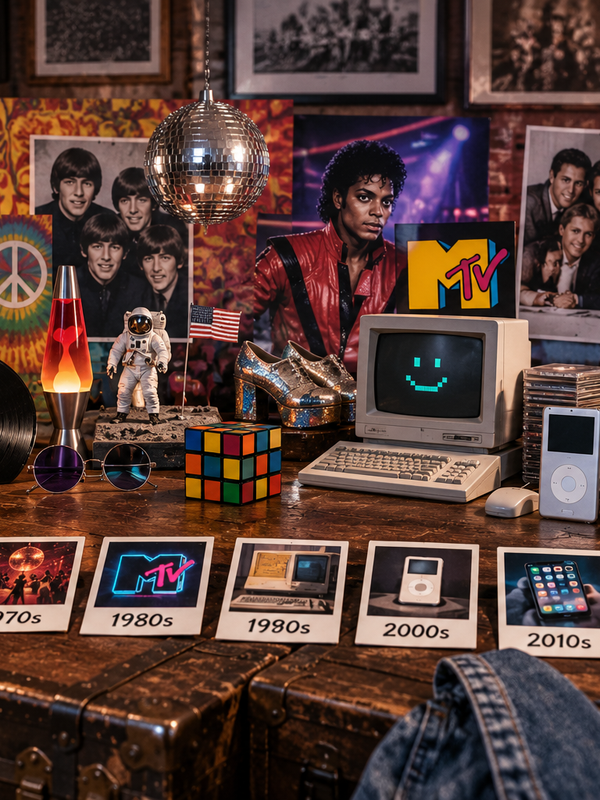
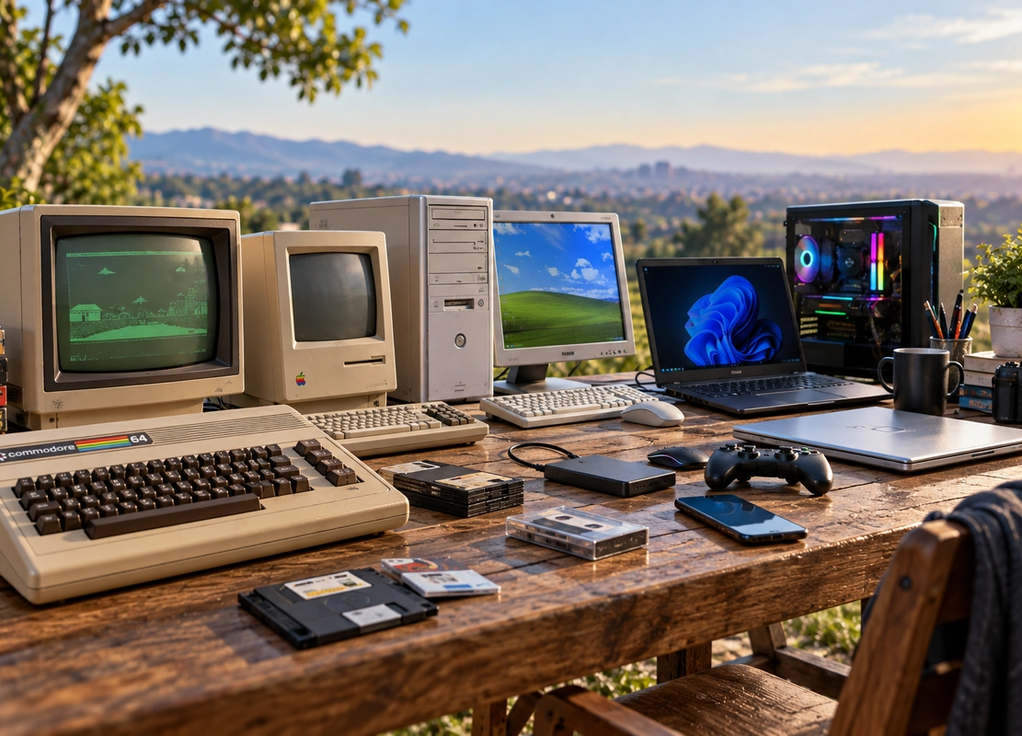
From the Commodore 64 and early Apple machines to the beige Windows PCs of the 1990s and powerful gaming rigs of today, the home computer has changed enormously.
But something else happened along the way.
Computers became more powerful, easier to use and more important than anyone could have imagined. At the same time, the traditional “family computer” slowly disappeared.
Here’s how the home computer conquered the world—and then became almost invisible.
Early home computers made computing personal
During the 1970s and early 1980s, computers were still strongly associated with businesses, universities and laboratories.
Then machines such as the Apple II, ZX Spectrum and Commodore 64 brought computing into ordinary homes.
The Commodore 64, introduced in 1982, became one of the most recognizable home computers of its era. It connected to a television, supported games and software, and gave curious users an opportunity to experiment with programming.
That last part mattered.
Early home computers weren’t sealed environments designed to hide complexity. They practically invited people to explore it. Users typed commands, loaded programs manually and sometimes entered pages of code from magazines just to make something happen on the screen.
For many future programmers and technology enthusiasts, the home computer wasn’t merely a device.
It was where they learned what computers could do.
The PC turned the computer into a household appliance
By the 1990s, the home computer was changing.
Instead of being primarily associated with enthusiasts, computers were becoming practical household tools.
IBM-compatible PCs and Microsoft’s Windows operating system helped establish a more standardized computing environment. Graphical interfaces meant users didn’t need to memorize as many commands. The mouse became essential. CD-ROM drives brought games, encyclopedias and educational software into homes.
Then the internet arrived.
Suddenly, buying a computer wasn’t just about word processing, spreadsheets or games. A PC was becoming your doorway to email, websites, chat rooms and an entirely new digital world.
This was the golden age of the family computer.
Many households had one machine sitting in a bedroom, study or living room. Everyone shared it.
Parents used it for work. Children used it for homework. Teenagers used it for instant messaging and whatever else they hoped their parents wouldn’t discover in the browser history.
Arguments over whose turn it was were practically part of the operating system.
The 2000s made computers essential
By the early 2000s, not having access to a computer was becoming increasingly inconvenient.
School assignments were typed rather than handwritten. Job applications moved online. Digital cameras required computers for storing photographs. MP3 players needed computers to manage music libraries.
Broadband internet made the PC even more useful.
Instead of connecting temporarily through dial-up, computers could remain online. Downloading files became faster. Video became practical. Online gaming expanded. Social networks appeared.
At the same time, laptops were becoming more capable and affordable.
That started changing the meaning of a “home computer.”
Instead of one desktop shared by everyone, different members of a household could have their own machines. A computer no longer needed a permanent desk. It could move between rooms, travel to university or come along on holiday.
Personal computing was becoming genuinely personal.
Smartphones quietly attacked the home computer
The biggest threat to the traditional home PC wasn’t another type of computer.
It was the smartphone.
Once smartphones became powerful enough to browse the web, send email, take photographs, stream videos and run sophisticated apps, many everyday reasons for opening a laptop disappeared.
Think about the things people once approached a computer to do.
Check the weather. Read the news. Look something up. Send a message. Check a bank balance. Buy something online. Watch a video.
By the 2010s, all of those tasks could happen on a device already sitting in your pocket.
Tablets added another alternative, especially for entertainment and casual browsing.
The PC wasn’t becoming useless. It was becoming unnecessary for many small tasks.
The modern PC became more specialized
The desktop computer never actually died.
Instead, its role changed.
Modern PCs remain essential for work that benefits from large displays, precise input and serious processing power. Programmers, designers, video editors, engineers, researchers and countless office workers still depend heavily on them.
Gaming also gave the desktop PC a powerful second life.
Enthusiasts now build machines with enormous graphics cards, elaborate cooling systems, multiple monitors and enough lighting to make an early computer user wonder why the machine appears to be hosting a nightclub.
The difference is that today’s desktop PC is often intentional.
People don’t necessarily own one because every household needs a computer. They own one because they specifically need or want what a desktop provides.
That is a very different position from the family PC of the 1990s.
The home computer didn’t disappear—it multiplied
Calling this the “fall” of the home computer is slightly misleading.
Computing didn’t leave our homes.
It spread everywhere.
The processing power that once required a dedicated desktop now exists in phones, tablets, televisions, game consoles, watches, speakers, cars and household appliances.
A modern home might contain dozens of computers without anyone describing most of them as computers.
That may be the greatest success of the home-computer revolution.
The Commodore 64 and its contemporaries introduced the idea that ordinary people could have computing power inside their homes. The PC expanded that idea until computers became essential tools for work, communication and entertainment.
Then technology became small and cheap enough that the computer stopped being one special machine sitting on a desk.
It became everything around us.
The home computer didn’t really lose.
It won so completely that we stopped noticing it.