Then vs Now: How We Actually Used the Internet in 2000 vs 2025
Jovanni Chan
September 8, 2026
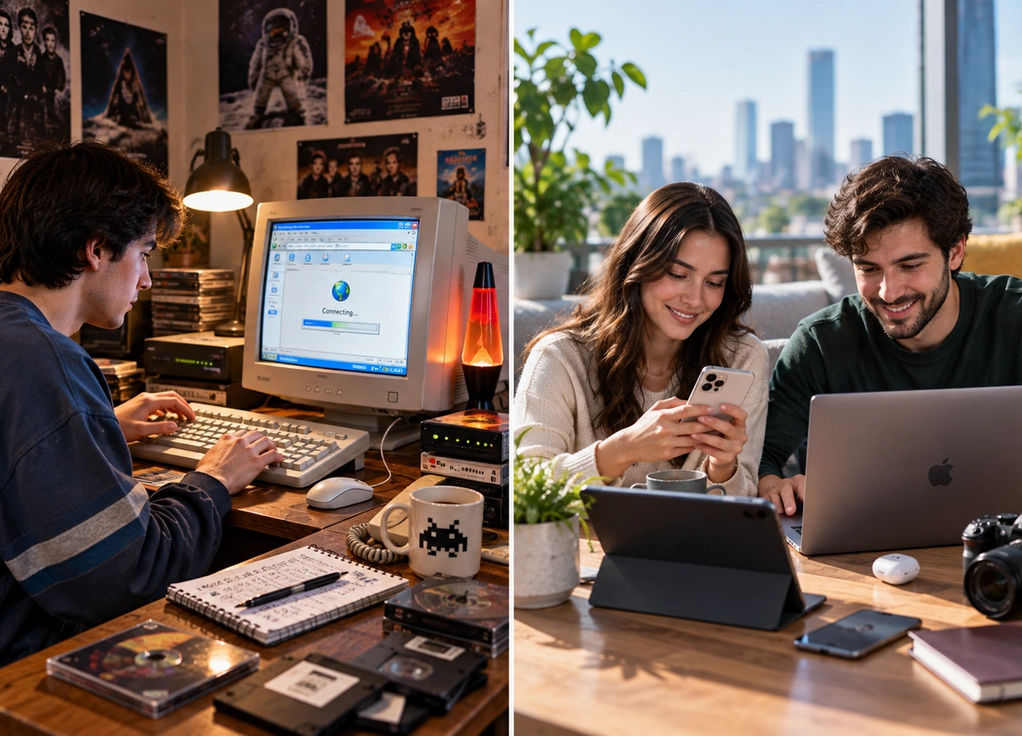
In 2000, using the internet was something you deliberately decided to do.
You sat down at a computer, connected through a modem and opened a browser. When you were finished, you disconnected and returned to the offline world.
By 2025, that distinction barely existed.
The internet followed us through smartphones, watches, televisions, cars and countless other devices. We used it to work, shop, date, navigate, watch television, order food, pay bills and talk to friends. Many people could go an entire day without consciously thinking, “I’m using the internet,” despite being connected almost constantly.
The technology obviously changed enormously over those 25 years. But the more interesting change was what happened to our behavior.
Getting online went from an activity to a default state
In 2000, connecting to the internet could involve an unmistakable sequence of sounds from a dial-up modem.
And then came the negotiation.
“Are you using the phone?”
If someone needed to make a call, your internet session might have to end. Connections were slow enough that loading image-heavy websites required patience, while downloading larger files could become a project of its own.
That scarcity influenced how people behaved online. You often went online with a purpose: check email, search for something, visit a favorite site, download a file or enter a chat room.
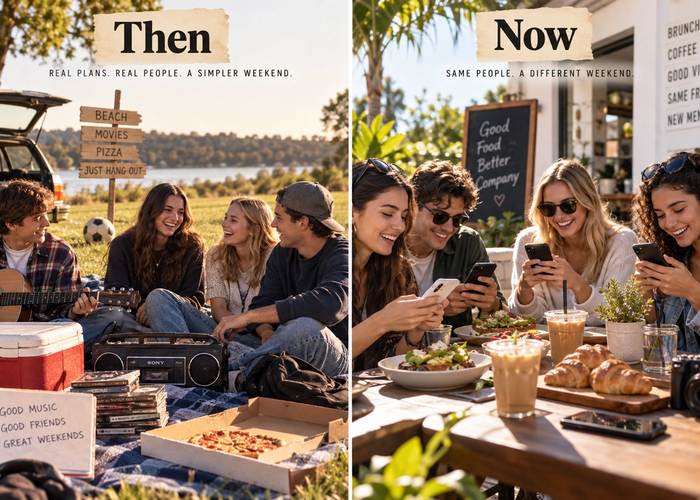
By 2025, most of us didn’t “go online.” We were online.
Phones maintained constant connections through Wi-Fi and mobile networks. Notifications arrived throughout the day. Apps updated in the background. Photos automatically uploaded to cloud storage.
The internet stopped being a destination and became infrastructure.
Search changed from finding websites to finding answers
Using the web in 2000 often meant knowing where you wanted to go.
People bookmarked favorite websites and sometimes typed addresses directly into the browser. Web portals organized news, weather, entertainment and other services into homepages designed to become your starting point for the internet.
Search engines existed, of course, and Google was already growing rapidly. But searching the web still often meant finding a website that might contain the information you needed.
By 2025, search had become far more direct.
We searched for restaurants, products, symptoms, directions, movie recommendations, tutorials and practically every random question that entered our heads. Search engines increasingly tried to provide answers directly rather than simply presenting a directory of websites.
AI assistants pushed this idea even further. Instead of entering a few keywords and opening ten tabs, users could ask complete questions and receive synthesized responses.
The internet went from something we explored to something we interrogated.
Socializing online became completely normal
Online social life in 2000 could feel like a separate universe.
There were forums, message boards, IRC channels and instant-messaging services. Screen names mattered. People carefully crafted away messages. Entire friendships developed through chat windows.
But being online was still somewhat distinct from someone’s “real” social life.
By 2025, that separation had almost disappeared.
Group chats replaced countless phone calls. Social media became a major way people followed friends, celebrities, brands and news. Dating apps turned online introductions into a mainstream part of relationships. Video calls made it possible to casually speak face-to-face with someone thousands of kilometers away.
The internet didn’t replace offline relationships, but it became deeply embedded in how those relationships were maintained.
Even the language changed. Saying you had an “internet friend” sounded much more significant in 2000 than it did 25 years later.
Entertainment went from downloading to streaming
Entertainment on the early internet required patience.
Music was one of the biggest attractions, particularly as MP3 files spread across the web. But downloading a song could take minutes—or considerably longer on a bad connection. Video was even more difficult.
Most entertainment still happened offline. You watched television according to a schedule, rented movies, bought CDs and played games installed locally on computers or consoles.
By 2025, the internet had become one of the primary delivery systems for entertainment.
Music streamed instantly. Movies and television shows were available on demand. YouTube offered an effectively endless supply of video. Podcasts could be downloaded automatically. Games received constant updates, and multiplayer titles connected enormous communities of players.
Perhaps the biggest change was expectations.
Waiting for entertainment became unusual. If we wanted a song, video or show, we generally expected to access it immediately.
Shopping went from an experiment to everyday infrastructure
Buying something online in 2000 still felt slightly adventurous.
People worried about entering credit-card information on websites. Product selection was limited compared with today, shipping could take time and many businesses didn’t have meaningful online stores at all.
You might research something online and then drive to a physical store to actually buy it.
By 2025, that relationship had frequently reversed.
People researched products, compared prices, read reviews and completed purchases without leaving the couch. Groceries, restaurant meals, clothing, electronics and household essentials could all arrive at the door.
The question changed from “Would you buy this online?” to “Why can’t I buy this online?”
We went from consuming the web to constantly creating it
The early web had creators, but most internet users were primarily visitors.
Building a website required at least some technical knowledge. Publishing photos wasn’t effortless. Uploading video was difficult. If you wanted an audience, you generally needed somewhere to host what you created.
By 2025, billions of people were effectively publishing to the internet every day.
A photo uploaded to Instagram, a TikTok video, a Reddit comment, a restaurant review, a livestream or even a group-chat message was part of an enormous stream of user-created digital content.
The barrier between “internet user” and “internet creator” had almost vanished.
In 2000, the internet was somewhere we went
That may be the simplest way to describe the difference.
In 2000, the internet was one part of life. You could log on and log off. Most of your photographs, conversations, entertainment, purchases and documents still existed somewhere else.
By 2025, the internet had become the connective tissue between almost all of those things.
We gained extraordinary convenience along the way. Information became instantly accessible. Communication became cheap and global. Entire industries became available through a screen.
But we also lost something peculiar: the feeling of actually leaving the internet.
In 2000, disconnecting was as simple as ending the connection.
By 2025, being disconnected had become the unusual state.